The pandemic didn’t just bring our everyday lives and social relationships to a near standstillit also reduced the possibilities
of documenting the world to almost zero. Filmmaker Juri Rechinsky found a solution: no crew, no director of photography, just
a body cam mounted on the upper bodies of a wide variety of people, opening up an unfiltered view of their reality. Together
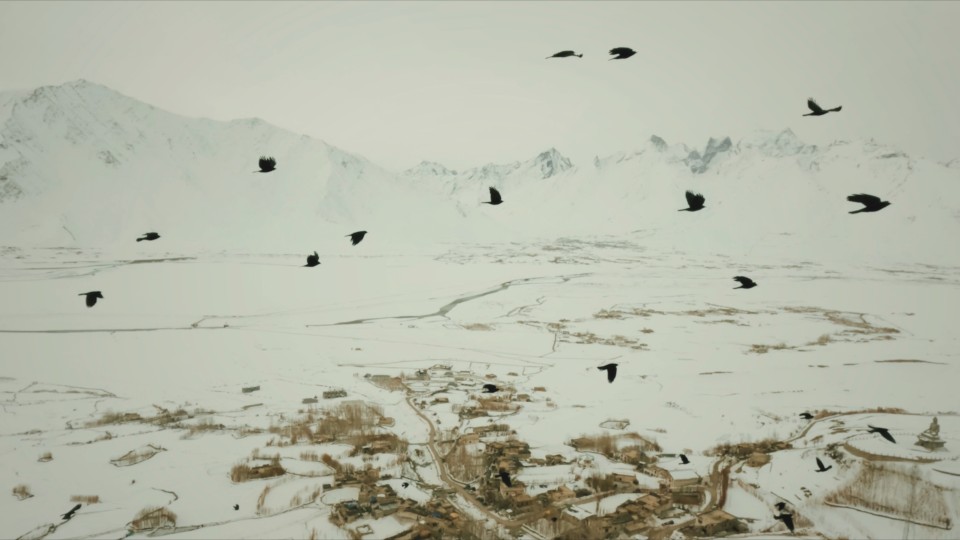
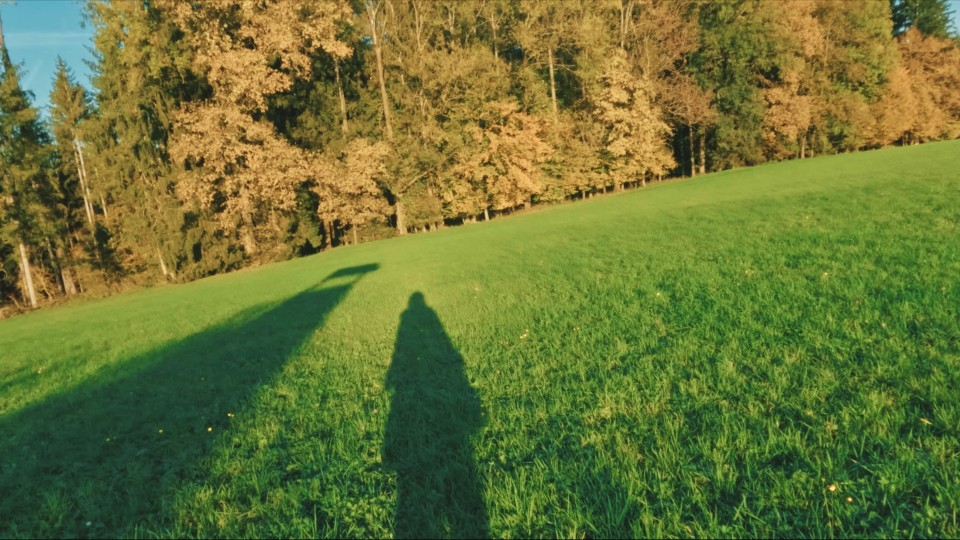
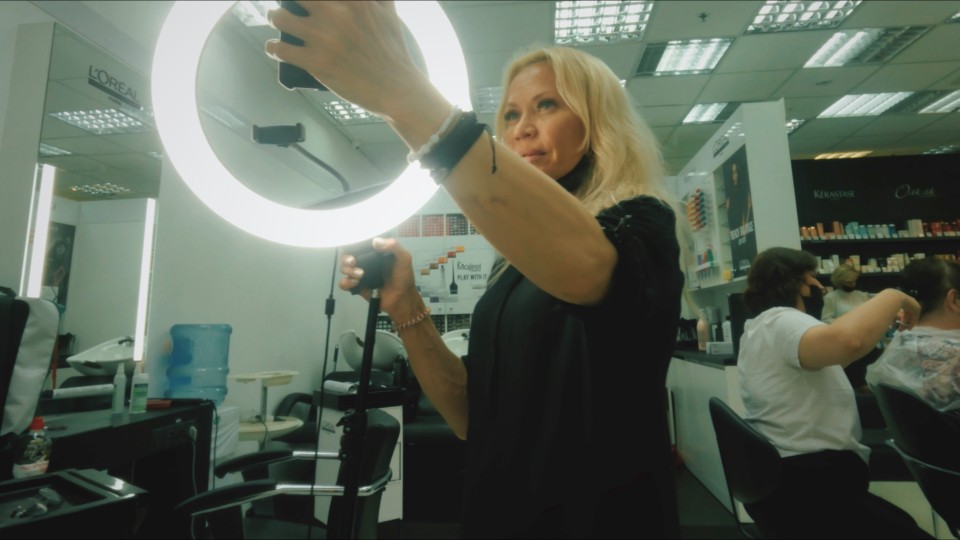
with Mario Hainzl, he spent several years creating a PORTRAIT OF NOWNESS, edited from hundreds of hours of raw footage, which allows audiences to slip into the immediate perspective of the protagonists
across contexts and continents.
Filming for PORTRAIT OF NOWNESS began during the pandemic. Making films had become difficult, if not impossible. Did the reality
of social distancing and strict hygiene regulations give rise to this particular setting, which made it possible to continue
filmmaking? Can you briefly describe the concept underlying this film?
JURI RECHINSKY: Now we feel easy to think about these times, since it is over. In spring 2020 there was a lot of fears, nobody knew whether
the pandemic would end and for how long this social isolation would last. We questioned ourselves: If this was to continue
for years, what were we supposed to do in this life? Something interesting was happening, I was keen to capture it. But how
to proceed given the fact that we were not allowed to leave our place? So, I thought about a set-up easy enough to send it
to people by mail, ask them to wear the camera on their bodies, press the record button and then send it back to me. I ordered
a GoPro-camera and modified it slightly so that it would work much longer than the regular ones. In the beginning, the cameras
overheated and we had continuously technical issues throughout the whole shooting period that lasted five years. Still, it
gave us the possibility to document what was happening. Regarding the concept, it was constantly evolving. In the beginning,
it focused on documenting the ongoing changes in the lives of different characters, both affected and unaffected by Covid.
Very quickly, however, it developed into a kind of study of everyday human life. How similar are wepeople from different
parts of the worldand how different? Can we relate to each other’s problems and joys? (spoiler: yes, we can.) Who is living
a more fulfilling, happier life, and does that depend on income, social environment, profession, age, mindset, or even the
substances we use on a daily basis?
The technical approach also played a significant role in shaping the concept. In the end, the film is composed entirely of
body-cam footage, featuring 13 characters as diverse as possible, often located in different cities, countries, or even continents.
How visible was this body camera once it was attached?
JURI RECHINSKY: I tried to wear it myself, just to see how it feels like. I was anxious about getting rejected by people in front of me as
soon as they would be aware of the camera, but very soon you realize how little people pay attention to each other. Everybody
is absorbed by their own problems. In terms of size, with some attachments and a power bank included, you could compare it
to the size of a cup of Capuccino. There were some straps on the chest and you only had to press the record button once. There
are a few moments we deliberately left in the film where the camera is visible in mirror reflections.
Firstly, I gave the camera to people close to me who couldn’t say “No” – to my son, his mother, some friends
Was this a trial period before you reached out on a larger scale?
JURI RECHINSKY: You can call this a trial period, funnily enough, two of the characters with whom I worked during this trial period made it
into the final cut: it’s David, a poet and philosopher, and my sister, Kai, who was living in pre-war Kyiv back then. They
wore the camera at a moment when it was still very unclear what the film would be about. We were in the rare situation that
we started a production without knowing whether it would work out at all. This added a lot of fear and pressure. We faced
fundamental questions such as: Can you follow characters who are shooting only from the perspective of their chest, characters
that you almost never see; most of the time you see their hands. How many characters can fit in? Does a kind of story evolve
throughout the day?
Juri, you’re also known as a filmmaker who repeatedly has pushed the boundaries of documentary storytelling. We’re dealing
with a concept in which you, as filmmakers, relinquish control over the gaze. There is no human eye deciding on the image’s
content or framing. What thoughts have been on your mind regarding this?
MARIO HAINZL: There was no prior experience we could build on. What intrigued me was the absence of a camera crew. Michael Glawogger once
said, “When you’re filming people you’re always filming people that are being filmed by other people”. Exactly this is not
happening in our film. There’s no fly on the wall having an insight into secret situations. I wasn't aware of the challenge
that would arise from the fact that there is no control over the story. We faced the very basic question whether it’s possible
to follow a story that is not moderated by a director. It was just action that unfolds – no meaning, no character development.
I’m always surprised that our viewers independently from the cultural context get the “story” and develop an understanding
for the different characters.
JURI RECHINSKY: Looking back at my previous films, I can say that they’ve always ended in an overwhelmingly chaotic situation. What I learned
was to trust and to give up control, since the most magical things happened in this chaos, things I wouldn’t have been able
to invent. My phantasy is more limited than the phantasy of life. I learned to appreciate when life throws you something that
provokes new feelings and new thoughts. I saw my main task in structuring chaos, allowing it to happen in a frame of budget,
dramaturgy and shooting schedule. In PORTRAIT OF NOWNESS most of the filmmaking was happening on the editing table. I considered
it as an impressive, but desirable challenge. Going through the material meant watching hours of the most boring and mundane
activities for which any DoP never would turn on their camera. But inside 30 minutes of a very banal situation there might
be one minute of a real cinematic moment, of a strong emotion, there might be a line turning everything upside down.
You told us that you started out on a very private scale. How did the project obtain its global scale?
MARIO HAINZL: We started shooting in Kyiv and Vienna. I was about to leave for a different film project in Senegal and Juri asked me to
take GoPro-cameras with me. The images from Senegal were shot within three weeks, they stroke us for both, their otherness
as well as their similarity and this experience showed us that we could extend the idea on a global scale, which we did over
the course of three years. I think it’s a genre in itself. I was wandering whether we could do another film based on this
concept or whether it’s used up after a first try. The weakness and the challenge of the format is the need to distinguish
people by their surrounding.
JURI RECHINSKY: It was one of the main editing tasks in every appearance of a character to make it clear as fast as possible who you’re with.
We had countless editing versions because of that.
How did you proceed – in terms of travelling and finding main characters?
JURI RECHINSKY: Mario made a number of trips always with GoPro-Cameras in the luggage. The last one was an extensive one, leading from the
Himalaya region in India to Japan and further on to California.
MARIO HAINZL: Apart from the trip to Senegal, I travelled exclusively for PORTRAIT OF NOWNESS. I went to Asia on a four-months-trip. We
had some very conceptionalized ideas on possible characters whereas others came on board very organically, since they were
very charismatic or represented a contrast to another already existing character. And we had one very precise idea, we wanted
to film somebody who would give birth to a child. We constantly faced the question: How can we create contrast and similarity?
And I don’t know, Juri, how you managed to get access to the soldiers in Ukraine.
JURI RECHINSKY: I started shooting in Vienna, then in Kyiv. With the beginning of the full-scale invasion in Ukraine, a friend of mine got
stuck in Ukraine. He was called to the frontline and tried to document different things. He got interested in helping us with
our project and filmed seven or eight characters, only one of them made it into the final version. It happened more or less
at the same time when I was shooting my previous film Dear Beautiful Beloved in Ukraine. With regards to the topic of war you meet potential characters every day. Four will say “No”, and the fifth one
will say, “I’ll be thinking about it”. Why not document what is about to happen, especially knowing that life can come to
an end at any given moment. Our film works with the desire of the human being not to vanish without a trace. What adds in
the case of war is the feeling of absolute insecurity, the constantly changing, probably very limited future and also the
feeling of injustice and fear. Filming from their own point of view helped people to express something which is important
to them.
Was this project an attempt to get one step closer to capturing and narrating “pure” reality? To enter the “unseen”?
MARIO HAINZL: I remember a homeless guy in Dehli who told me that participating in this project was the opportunity to share with people
the feeling to be looked at, to be treated as scum. And showing their own life was not the only motivation to participate,
it was also a possibility to be a representative for people sharing their fate. The same applies to the pregnant woman who
encountered a lot of criticism because she had decided to have a home birth. Her participation in the film is an almost political
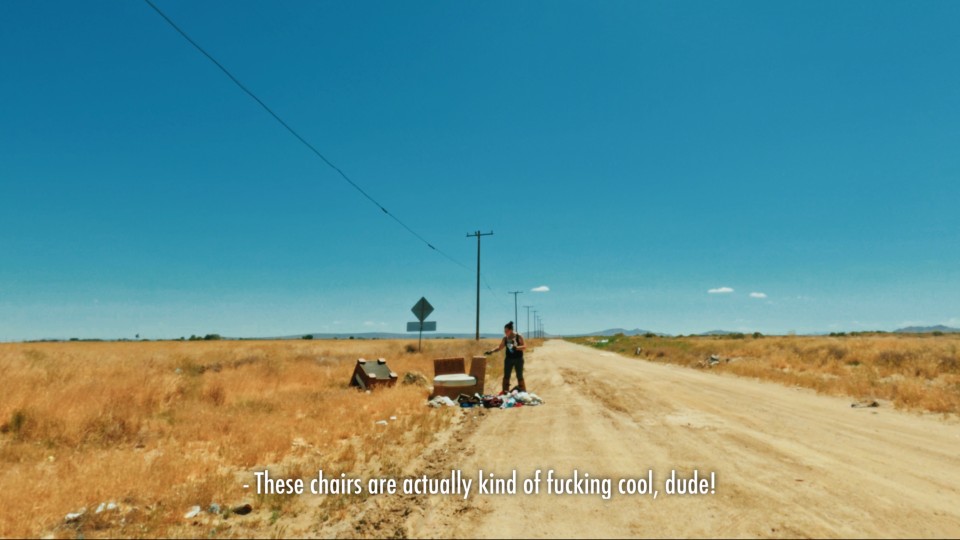
act. On the other hand, the film project and the camera gave us access to totally segregated worlds, such as the desert dwellers
in the desert of California. I tried to get in touch with communities living in trailer parks outside of L.A. I was warned
by the police and also threatened by a guy with an automatic gun when I arrived. Innocently I said, “I’m just a photographer
who wants to talk to you”. Maybe very naïve, but
two hours later I sat together with one of the desert dwellers and we talked
about our recently lost loves. It’s a beautiful experience when somebody trusts you by giving their images and lives.
My first impression was that due to this individual bodycam setup there was less of a relationship between filmmaker and protagonist.
Apparently I’m wrong.
MARIO HAINZL: All participants showed us a lot of trust by opening up their lives, which we had to handle with care.
JURI RECHINSKY: I’d say in terms of personal relation it was quite conventional. But one develops a very strong and strange one-way-relationship
during the intense editing process. Editor’s relations with the people within the frame. You feel for and appreciate somebody
you don’t know personally. I discovered a very joyful person in Barbara from the trailer park, she doesn’t know me, but for
me she is, among all of them, one of the kindest, most balanced characters.
MARIO HAINZL: Definitely, you build very one-sided relationships with your characters. The market woman in Senegal accepted immediately,
I handed over the camera and picked it up two days later. For her, I’m a person she met twice in her life over the course
of three days, we, however, were spending five years with her. The most valuable thing about this film is the raw material.
When you watch 20/25 hours of footage from the life of one person, you get a very detailed feeling of their life.
Was 20 hours the median amount of footage at your disposal?
JURI RECHINSKY: Usually, our characters filmed for a couple of days. Sometimes the camera bugged out, which means there are interruptions
in the recording. Sometimes the character and their story were particularly promising and we tried to get a bit more material,
usually it was around 25 to 30 hours.
Given the amount of footage, it seems there must have been months of watching material. How can one imagine your starting
point of the editing process?
JURI RECHINSKY: Our initial procedure was to take 12 to 20 hours of footage filmed by one person and edit 90 minutes of the best scenes out
of it. But then, we had to integrate these short versions into a completely different film, which is not about one single
character, but about an ensemble of them, where every shot, every appearance is supposed to interact or connect with its neighbours.
In the end, it turned out that we only had between three and ten minutes of footage of a fascinating character in the film.
We lost an incredible amount of stuff.
MARIO HAINZL: One of the most interesting aspects was the psychological learning curve. You are so close to another person, that you experience
what it means to be a different person, you get all those undirected, nonsensical things – self-talk, the conversations with
family members and friends. I learned a lot about humans by looking through their eyes.
JURI RECHINSKY: One thing is watching five hours a day of cinematic material where people press record at the right moment and turning off
the camera at the right moment. The other thing is watching the documentation of repetitive and most of the time senseless
things. This is terribly tiring. At some point, I gave up on watching raw material, since it was so demanding. We ended up
outsourcing the process of reducing the material of the characters to assistants, who made it into pre-selection, because
it was mind-numbing. Nevertheless, in many cases we had to go through this process ourselves and start out from scratch with
the most prominent and the most challenging characters.
MARIO HAINZL: I’m thinking of the material from Japan. It meant listening to endless hours of dialogue that you don’t understand. We tried
to anticipate from the sound of the voices whether something could be interesting, then sent it to human translators or translation
tools. I remember a feeling of being in front of a wall which is impossible to penetrate, we wanted to understand the footage
not only on a language level, but just understand the situations. We had to stay very consistent despite the exhausting nature
of the work. When we worked on the material from Senegal we had the support from a friend who came to Vienna for three weeks
and translated for us the almost 400 pages of transcription we had prepared. It happened time and again that material started
out very promisingly, then we focused on it, and suddenly it turned into something completely trivial. Sometimes we came across
a gem, and our task was to find the right place for it within the overall structure. And sometimes, unfortunately, we couldn’t
find a suitable place for some highly interesting passages because they didn’t fit into the context anywhere. It was a battle
of materials.
And there’s no denying that we were a bit paranoid that an outsider might overlook something exceptional in this preliminary
screening. At first, it was really hard to identify and sort out the good stuff. One of the best examples is the children’s
song in the beginning, which is not staged at all. We came over it pretty late. It appears in the middle of a stretch of pitch-black
material, that starts like half an hour before the song. We did make the effort to watch it, thinking they were already sleeping,
hoping something would happen. Suddenly this dialogue between the mother and the little boy unfolds and the he asks, “How
come that different songs have different melodies?”, which delivers a metaphore to what is happening later on in the film.
One of the solutions in the montage seems to lie in creating a sense of simultaneousness with the many transitions into similar,
almost identical movements.
JURI RECHINSKY: I loved the effect of the film when I realized that it takes me through so many different bodies at so many different places.
At one moment, I’m in the body of a Senegales schoolgirl, at another moment in the body of a grandmother. When I caught this
sensation for the first time, I felt euphorical. I felt like myself getting wider and breathing on my full capacity. It was
the decisive moment when I realized that this experience of simultaneity had a profound, joyful, and revealing effect. It’s
a theme per se throughout the film.
MARKO HAINZL: It’s not only about structure, but also about meaning. From a structural perspective, the simultaneity helps to find a common
thread running through a chaotic story that has been lived rather than directed. From a narrative perspective, we are dealing
with a constant interplay of contrasts and similarities. Simultaneity helps the viewer to navigate through the film. We don’t
guide the audience through the film; on the contrary, we demand a lot from them on very different levels.
You mentioned Michael Glawogger earlier. Did his approach to documentary filmmaking influence your own way of working?
JURI RECHINSKY: Absolutely. Funnily enough, Michael Glawogger also marks the starting point of our working relationship with Mario, which
began ten years ago. Michael was one of the first topics we discussed. We’re both big fans of him, both as a person and as
an artist. I think his films are a powerful source of inspiration, and they really capture our shared taste in cinema.
MARIO HAINZL: If I have a role model, it is certainly his way of approaching subjectsnamely, with a deep affection for his protagonists.
I see no voyeurism in his work; rather, I sense an air of fantasy, while at the same time he always remains firmly grounded
in reality. You could say he lived his films. For him, cinema was a way of life. Seeking to see as much as possible, in order
to understand what it means to be human.
JURI RECHINSKY: In his films, I always sense a joy in filmmakinga joy in playing with the tools of cinema.
To conclude, I’d like to discuss the final scenes of the film and ask how you came to decide to end it with the first images
of a newborn baby? You create a dramatic arc, from a child being put to bed by his mother at the beginning of the film as
kind of routine and you close the film with the scenes of a home birth as a unique and primal event. After viewing hundreds
of hours of footage, what led you to this decision?
JURI RECHINSKY: This ending is about my subjective view on the meaning of the film. It answers my main question of what this film is about
– which is a question to myself and the world around us: “How to live this life, knowing how difficult, how unfair, how full
of struggles, suffering and death it is? How to live this life knowing that every day of my life somebody is being killed
or horribly mistreated?” I’m afraid there isn’t a verbal answer. But the film itself is an attempt to give one. The final
scene of the birth means a manifestation of love, of the hope that love will win; that at least this family will be fine and
safe, be able to enjoy their time together and this child will grow up and be genuinely grateful for this experience of life.
At the same time there are things within the scene that are intentionally double-edged. I like the sentence, “Welcome, you’re
at home.” These words aren’t cynical, but they’re sharp and raise the question: “Welcome, where?” Are we okay with this welcoming
place? Still, especially today, it’s not very clear what we can do to make this place a better one. What can we set against
armies, bombs, maniacs at power, and the absolute devaluation of human life? Perhaps only this – the insistence on being present,
on loving, and on going on, despite everything.
MARIO HAINZL: When I first heard the word “at home,” my reaction was that it didn’t refer to this house itself or the city. For me, it refers
to all the characters, to something that is not about space. It’s more about time. Home can also mean a period of time. And
maybe the child is also a metaphor of all the people we didn’t feature in the film. A newborn child is a tabula rasa, he or
she hasn’t had neither good nor bad experiences. The film doesn’t focus on a certain topic. It’s more of an approach of being
aware of how it feels like to be somebody else. It opens up the possibility of being someone else. If people would just consider
this possibility, many problems would resolve themselves. A child represents an empty container and we showed in PORTRAIT
OF NOWNESS a couple of containers from an inside view.
Interview: Karin Schiefer
March 2026