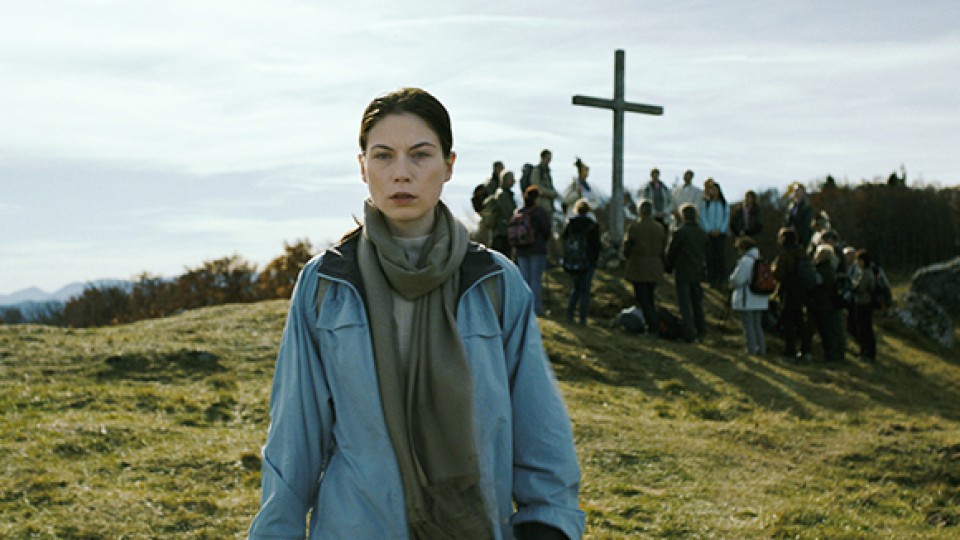
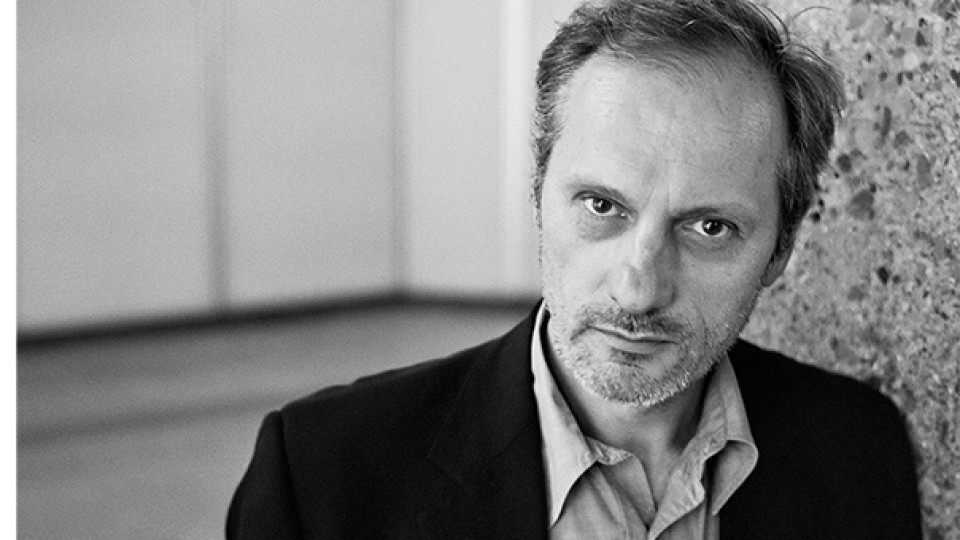
Götz Spielmann talks about his new film scheduled for world premiere at the TIFF 2013.
There’s a great deal about unlived life in Anton Chekhov’s Three Sisters, and dreams that never come true because none of the characters dare to leave their provincial home. October November tells
the story of two sisters who grow up in the mountains; one of them stays, and the other leaves and becomes a star. Could I
say that this idea’s developed further in your story—one of the two has the courage to leave and despite her success
faces the same mysteries that life presents?
Götz Spielmann: Everyone’s influenced and made what we are by an immense number of things. And Chekhov’s one of
my favorite authors, so we can assume that he influenced me. But fantasizing and searching for stories tends to take place
in an empty or chaotic intellectual space, and this search starts from scratch, not a model. In this process, where you go
on a journey with ideas and fragments until something comes together that must be told in a story, you definitely have your
guardian spirits. No one’s an island and creates things from their own head. But that isn’t a conscious continuation
of existing works. I’m not post-modern. And if I wanted to use Chekhov, I’d tend toward Uncle Vanja rather than Three Sisters. My favorite among his plays.
A central theme in the lives of these sisters is self-actualization and self-alienation, as if they were two mutually exclusive
poles. Sonja’s the one who sets off on the path to self-actualization, but paradoxically it seems to also have led to
alienation from herself.
Götz Spielmann: Every story poses a question. This theme isn’t dealt with intellectually, but through narrative methods.
That’s a fundamentally different type of examination than what the mind does. You tell stories with characters, spaces,
moods, emotions and images, not with thoughts and ideas. But if I had to define the theme of October November, I’d say it’s the question of identity. That’s a central issue in our lives. Self-alienation and self-actualization
are involved, and also the question of meaning, and why I’m on this earth. That’s why the father’s death ends
up playing such an important role in this story: Asking the question of one’s true identity is reasonable only when the
greatest certainty we have in life - that it will eventually come to an end - is included.
Isn’t it a recurrent theme in your films, one that’s often addressed, and which the father sums up when he says,
“You don’t have to change anything, you just have to recognize how beautiful it is.” Fatalism in the sense
of accepting what a person goes through? Regardless of which path one chooses, what decisions one makes in life, the moments
of helplessness and doubt are unavoidable?
Götz Spielmann: Possibly. But the father’s a special kind of character, because he has a near-death experience that changes
him fundamentally. He speaks as a character and not a mouthpiece for my ideas. This character has had an experience that removed
his perhaps unconscious fear of death in a radical way. And from this moment his view of life is changed. In the depths he
learned a kind of meaning independent of the circumstances of one’s life. And yes, I consider that extremely worthwhile.
But it would be very much contrary to my worldview if that’s interpreted as fatalism in the face of sociopolitical circumstances.
A great many things in our society aren’t right the way they are. The antisocial behavior of economic empires, the pathological
greed of a number of powerful individuals and the resulting effects, such as long-term destruction of our planet, growing
injustice, exploitation. I observe all this with increasing alarm. At the same time, you can find an existential foundation
for your life that’s independent of society’s system. That doesn’t lead to fatalism, but vitality. It’s
a kind of freedom that provides an individual an opportunity to be a positive force in the world. Including in the fight against
what’s wrong.
October, November: That’s the time of the year when the days get shorter and sunlight comes from a lower angle, when
nature loses its colors and shadows become longer. Is OCTOBER NOVEMBER an experiment involving shadow worlds? And death, mysteries,
deceit, appearance and reality?
Götz Spielmann: Firstly, it’s simply a story about a family. The rest came from my work on it. Telling a story naturally
takes you to the dark sides and suppressed things that pile up in a person’s life. But I consider the film the opposite
of dark, because the look it takes at things isn’t pessimistic. And fall’s a wonderful season, even though it’s
when some things come to an end.
Storytelling always has a kind of dual nature – a surface and a depth that adds an association of light and shadow, and shadow’s extremely powerful in this film.
Götz Spielmann: I’m quite pleased to hear that my work’s seen in that way. A film, an artwork in general, isn’t
merely a visual illustration of theories from an artist’s head. It represents an independent level of expression. Creating
it’s possible only when my narrative goes beyond my ideas, and outgrows them. Then I have the sense that the film I’m
making is smarter than I am, more complex than my thoughts. I’m not one of those concept artists or social critics who
make visual depictions of their views of what’s happening or look for stories that provide evidence backing up what they
think. That’s not my approach.
Almost every character in OCTOBER NOVEMBER has a secret that brightens or lies heavy on their lives for some period
of time, is a deceiver or deceived. What isn’t known for sure is suspected. Is conscious and unconscious knowledge a
theme that’s often on your mind?
Götz Spielmann: Yes, that interests me a great deal. Our lives are determined to a great extent by unconscious thoughts: emotions,
our unconscious worldview, our prejudices, instinct and intuition. All those things are thought processes and not intellectual
processes of reason. To that extent the interplay of conscious and unconscious elements quite simply involves a more complex
form of realism. Possibly not on the surface, but in the sense of an approximation of what really rules, constitutes and drives
us humans. That could be more directly tangible in October November, I hope so. The story doesn’t work like a conventional plot, and writing it was extremely difficult. Dramatically, the
film’s told in an epic manner, but without the effort that normally drives epic storytelling. You could call it epic
film in the form of a chamber play. The spectator isn’t drawn into the tension of classic plot structure, as is usually
the case in arthouse film. I hope that provides the spectators with an open space, freedom. Which in turn produces a different
kind of precision in the experience.
As mentioned above, OCTOBER NOVEMBER doesn’t follow a classic plot line. One event where this becomes especially clear is the father’s death. At first
it appears that this will set the story in motion, but eventually it turns out that dying, the slow process of leaving this
world, is what determines the story’s path. Was it very important for you to treat death in a different narrative manner,
in a way contrary to expectations?
Götz Spielmann: I’ve experienced this myself and heard it again and again from friends: Accompanying a person you’re
close to while they pass away can be a great and enriching experience. That’s not really surprising. Death is the greatest
certainty in life. If it were simply meaningless, terrible, incomprehensible, then that would also be true of life itself,
if you really thought about it. But I don’t think that’s the case. Because life, just like death, is a mystery and
has a hidden meaning. In a sense that was the story’s objective and point of departure. And the two sisters experience
something at their father’s deathbed that completes their development and transformation in this story.
What associations made you choose the title OCTOBER NOVEMBER?
Götz Spielmann: It has a certain melody that’s right for the film. Something undecided and pending. “October, November”
is also a time period, you immediately think that there were and will be other months and seasons before and after it. That’s
somehow apt for the story, which is about a phase in the lives of a few characters. Their backstory’s quite tangible,
and I hope that the spectator will have the feeling that the story will continue, beyond what’s told. I also like the
title’s lyricism.
The film begins with a film shoot. Is the way the film world’s depicted meant to portray it ironically, to question your
own medium?
Götz Spielmann: No, not at all. What’s being shot is a conventional TV movie. And I didn’t portray it ironically.
I wanted to show in the most matter-of-fact way possible how a mass-produced film like this is made. In many cases serious
craftsmanship’s involved. By the way, writing the dialogue scenes for the TV movie was one of the most difficult parts
of this project, that’s not my narrative style. Being ironic and making fun of something would have been easy. Writing
something like that wouldn’t have taken long. But getting this mediocrity, this fake pathos, the artificial drama right
so as not to vilify it - that was hellish.
The actors represent an important factor in all your films. You already worked with Ursula Strauss for Revanche, and possibly had her in mind when writing the character of Verena. What types of actors did you want for Sonja and the father?
Götz Spielmann: Firstly, the actress who plays Sonja had to credibly personify the trivial glamour of a TV star. Then become
more authentic, simpler, more real. And she had to be Austrian, because this development’s also reflected in the way
she speaks, which moves toward an Austrian intonation. The father’s character demonstrates a broad spectrum also. A patriarch
at the beginning, domineering, self-confident and generally dissatisfied. Then after his heart attack, gentle, attentive,
almost happy. That requires an actor who can release these contrary traits in himself in an authentic way. During the search
for actors inner credibility was almost more important than appearance. In that case we, the film, were fortunate with the
cast. The experience with all the actors was wonderful too, and truly special. Because everyone contributed so much to the
story and their characters, without any ego trips or self-importance. They were there for the common goal, for the film, and
also for each other and with each other. That was great.
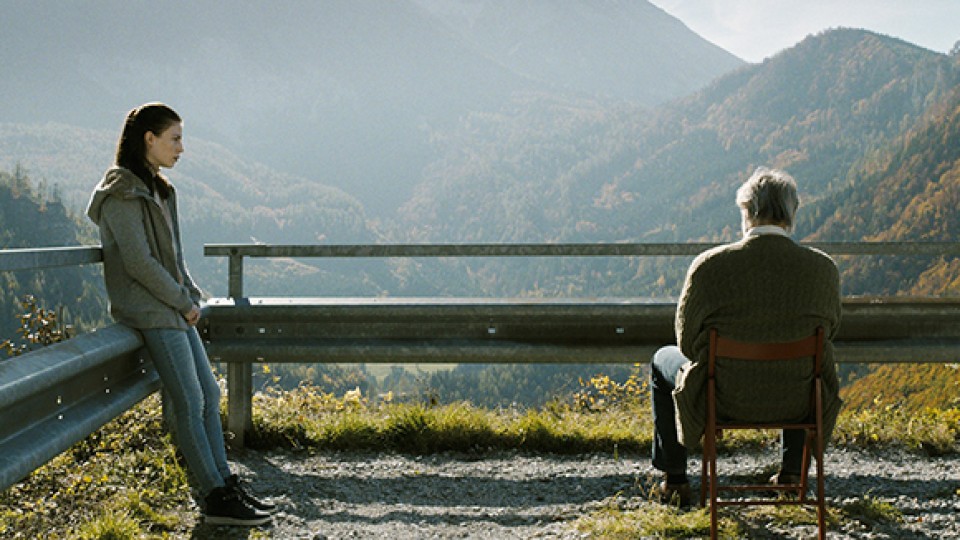
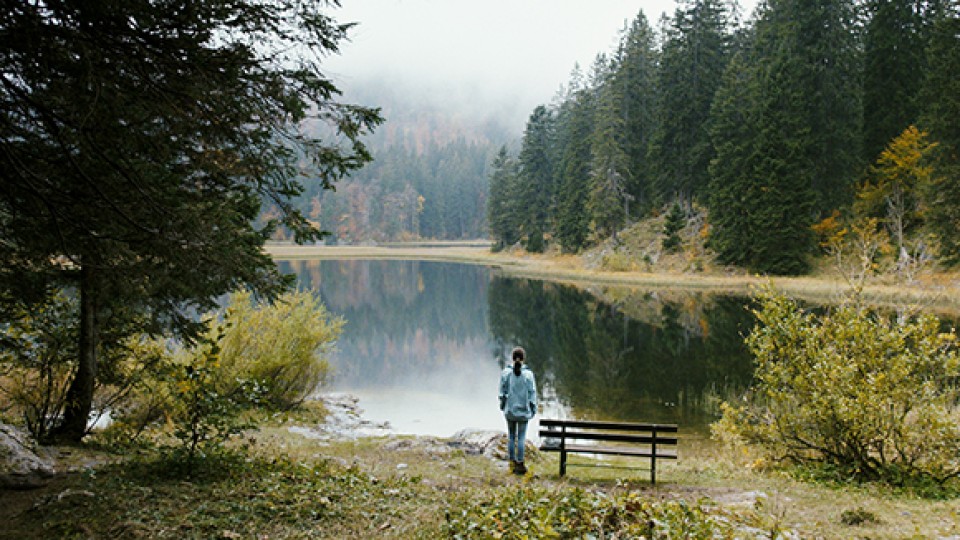
For the two sisters, who are extremely different, you outline antithetical worlds – one urban and the other rural, a surface and a depth – each with certain kinds of light and colors. How did you and your tried-and-true cinematographer Martin Gschlacht design the
lighting and images this time, also in light of the fact that the film’s set in growing darkness?
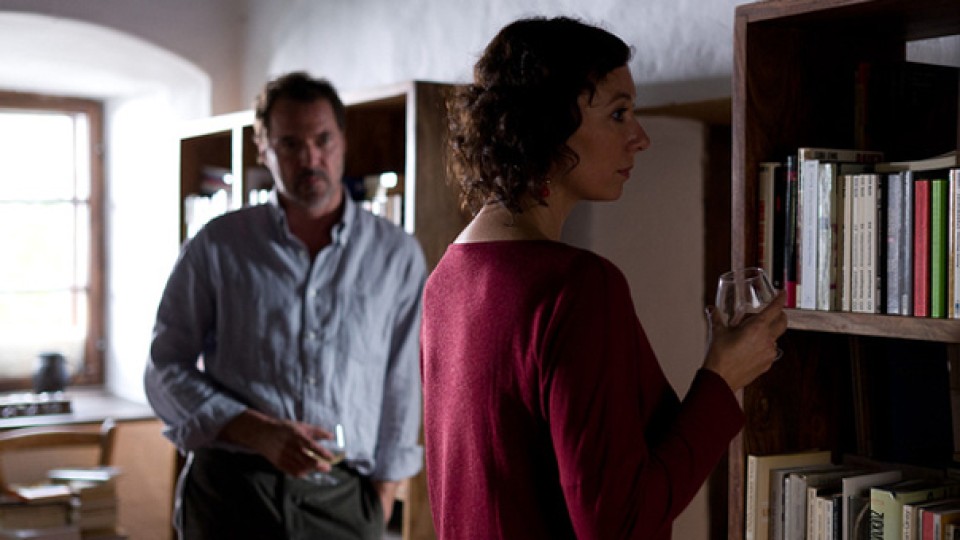
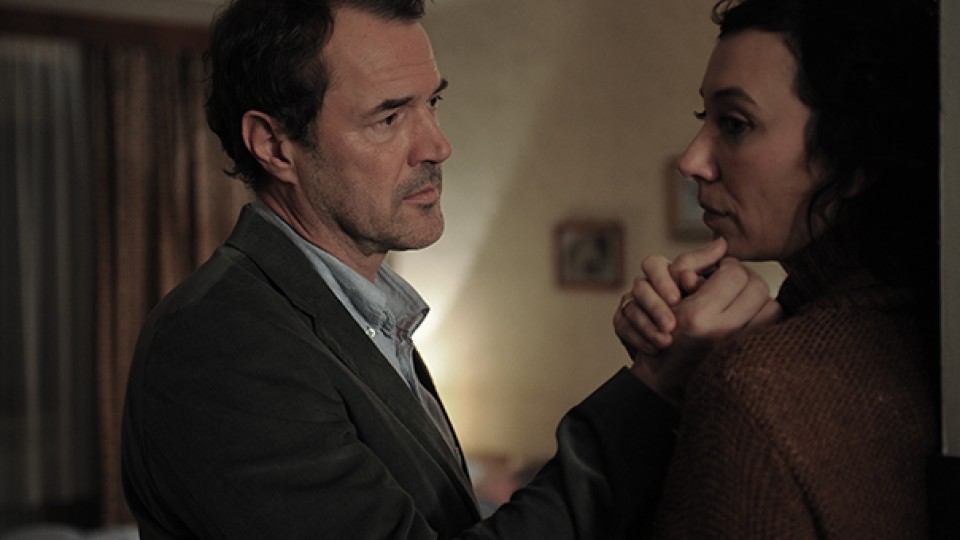
Götz Spielmann: We continued our work right where it stopped last time. That means using natural light whenever possible and
solely a minimum of artificial light. I think that the inn, our main location, was especially difficult for Martin. And he
did a wonderful job of dealing with it.
With regard to images and rhythm, we work relatively spontaneously. During preparations we don’t spend much time talking
about formal matters, but a great deal about narrative and images in general, and also about the story and what we want to
say with it. While shooting I normally set the rough structure and rhythm of a scene - what should be told through shot/reverse
shot, where I want to make cuts and where I don’t, etc. We use this basic structure to jointly develop the images more
concretely while shooting. A storyboard’s made up only for those scenes where it’s necessary for technical and organizational
reasons, such as the near-death experience. Otherwise, we’re well prepared and then make spontaneous decisions. I prefer
it that way, because it makes filmmaking a living process, and shooting doesn’t turn into just the execution of something
thought out in advance. It’s acting in the moment. This intuitive concentration is in my opinion a fundamental part of
an artist’s work. If everything had been planned out in advance, I’d feel as a director that I was merely executing
my own plans. That would be much less interesting.
Elegance is one association that I think is present in a number of this story’s facets. Is that an attribute you can
see in connection with this story?
Götz Spielmann: That’s nice. If that’s the case, I’d be glad to identify with it. Elegance is a product of
two things: precision and simplicity. And those are my top rules for working in film: being simple and precise. That’s
what I strive for in every scene, with every single frame. And elegance would then be a sign of success. I believe it was
Einstein who said, “Say everything as simply as possible, but no simpler.” If something’s too simple, it eliminates
elegance right away.
Interview: Karin Schiefer
August 2013
translation: Steve Wilder