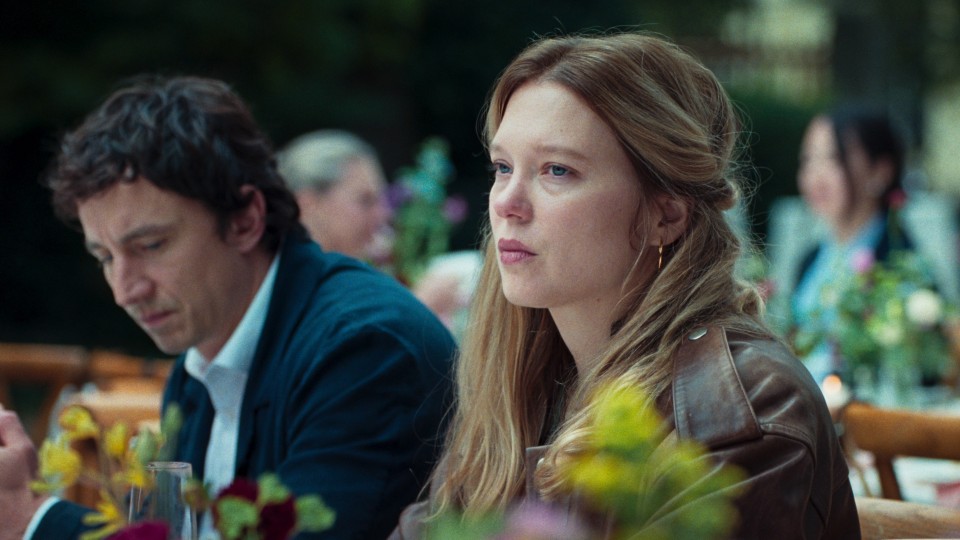
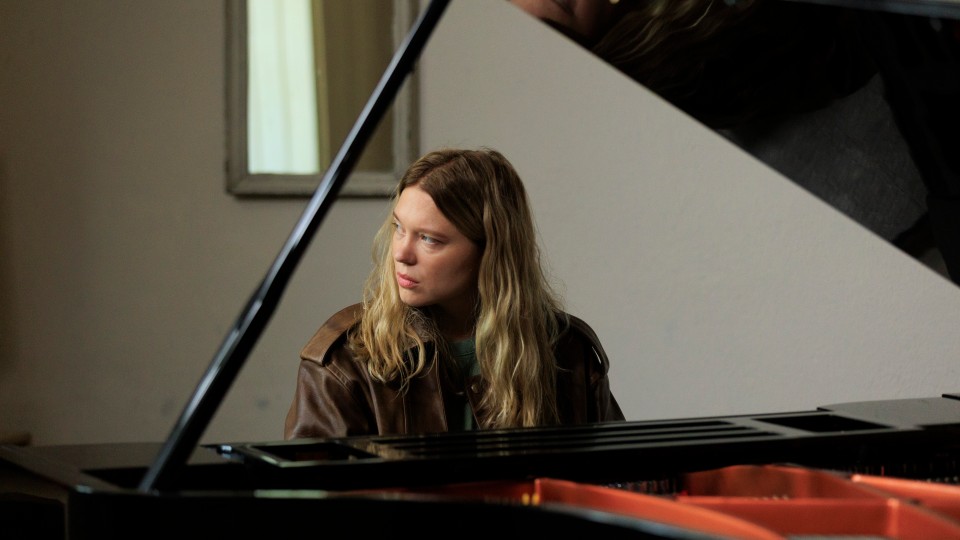
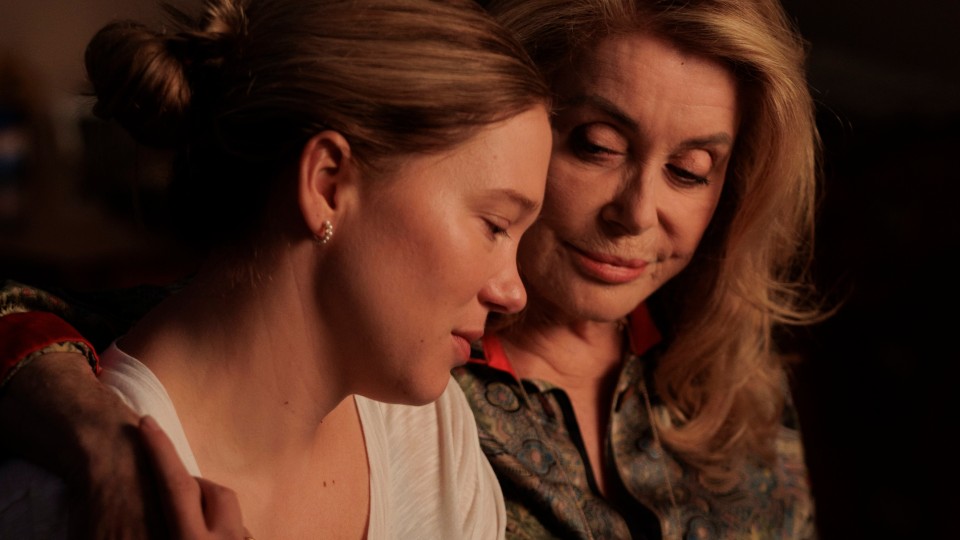
Idyllic seems the most apt term to describe Lucy and Philipp's new family life in the countryside: an old house, a large garden,
lots of silence – if anything, perhaps a little too much for a musician of Lucy's caliber. Nobody would suspect that a timer
is ticking on the hard drive of Philipp's computer which will bring everything crashing down. In GENTLE MONSTER, Marie Kreutzer shines a light on one of the many hidden facts about sexualized assaults in a family setting and also depicts
the devastating power of truth when a web of silence breaks and a life once dreamed of shatters.
Conversations of this sort are often an initial exchange of ideas about a film that is on the verge of international release.
In the case of GENTLE MONSTER, however, we are meeting several months after its world premiere in competition at Cannes, and
it's fascinating to discover what effect that launch has had. Since then, you’ve accompanied this film around the world; were
you surprised by the intensity that has involved?
MARIE KREUTZER: That wasn't a surprise. Corsage was a surprise, because it was the first time we had such extensive international sales,
including a US release. Even though it was on a different scale to GENTLE MONSTER, in 2022 I spent almost a year travelling
with Corsage. That's what I'm doing again right now... and again I constantly question the whole idea, because it takes an incredible
amount of energy. PR and marketing work on a film definitely comprises a major part of the profession.
Doesn't this exposure also make you more aware of the pace of the market?
MARIE KREUTZER: I don't have enough insight into that. Right now, working on my own film is so challenging that I can't keep up with market
developments. The promotional campaign for my film involves me going to a lot of festivals; I keep meeting the same filmmakers,
and I'm often asked which film I like most this year. But I don't even get round to watching most of the films. You find yourself
in a strange bubble where everything revolves around your own film all the time. In career terms, all this attention and the
contacts that come with it are fantastic, priceless; at the same time, it means that the net time I spend working creatively
on something gets smaller and smaller. But of course, it's a wonderful feeling to have a success like this, which entails
a huge amount of recognition in the film bubble that surrounds me, both professionally and personally.
Do you have any figures to give us an idea of the commercial success that GENTLE MONSTER is enjoying?
MARIE KREUTZER: The latest information I have is that the film has been sold in over 50 territories; there were actually several offers from
major distributors at Cannes, including Netflix as the US distributor. Having the Netflix brand is a huge added value: even
people outside the bubble can relate to that. Considering the theme of GENTLE MONSTER, I felt it was important to use a narrative
style that makes the film feel as naturalistic and organic as possible, rather than exaggerated or spectacular. But that also
means you always have to resist making it "sensational" visually. We wanted a film that feels authentic. The film deals with
a subject that is difficult, and the style isn't inherently sexy. Those were both factors – and I was aware of that after
Corsage – which weren't helpful in terms of sales. So I regard everything that's happening now as a gift. The fact that GENTLE MONSTER
is gaining this broad reach through Netflix means that a film about sexualized violence against children will have a certain
impact.
What does Netflix exploitation mean for you in terms of promotional and travel activities?
MARIE KREUTZER: I've been to Australia with the film, I’ve already been to the USA three times, and I'm going a fourth time at the beginning
of November, because the campaign there has been on several fronts. The aim is to reach as large an audience as possible on
the one hand, while focusing on potential awards as well. And of course, it's also a matter of making contacts that are important
for my career. Even with Corsage, I noticed that in the USA, people work on long-term professional relationships. Laying the foundation in that way, four
years ago with Corsage, has now paid off.
Exactly a year ago, you were filming GENTLE MONSTER. Did it feel as though you were venturing into risky territory, embarking
on a kind of Himalayan expedition, before filming began? What makes you particularly happy now, when you see the finished
film on the big screen?
MARIE KREUTZER: The image of a Himalayan expedition captures the feeling very well. A famous actress once told me that every film is like
a mountain; you climb up to the top, and afterwards you're right back down again. You never start higher up when you’re doing
a tour; you always have to begin at the bottom. The preparations – starting work, being scared about the whole idea – have
to come first. By the time you start filming, you're already relatively high up. That's why filming is always the best part
for me, because that’s when you create something together. It's the moment when I feel especially alive. While I’m filming,
I don’t think much about the product and how it’s going to work out. I can only make a film well if I'm present in the moment,
and at that moment I can evaluate it and say: "I believe that". It's a time that’s not about strategy at all, and it's also
the phase of filmmaking when the director’s work is questioned least. When you're filming, you're simply the queen. You're
never that beforehand, or afterwards.
What motivated you to set the story in a bourgeois, bohemian family from an artistic background while also focusing on the
situation of the policewoman who is investigating?
MARIE KREUTZER: A key finding from my research was that in cases of child sexual abuse and exploitation, as well as sexualized and domestic
violence, the perpetrator almost always comes from the immediate social context. Home is the most dangerous place for women
and children. I wanted to show that the perpetrators aren’t restricted to any social setting – and that they’re closer to
us than we’d like to believe. In GENTLE MONSTER, I depict two male characters who do have lovable sides. Which is exactly
the problem. I wanted the second narrative level to indicate the scale of the problem: on the one hand, the case devastates
Lucy's family, but from Elsa's perspective, it’s just one of many, and it has to be handled pragmatically. And I felt it was
important to pose the question: to what extent do we share some of the responsibility, if we don’t look at what’s going on
and speak out against it?
You have said that GENTLE MONSTER is a film about honesty, especially about honesty with oneself. That kind of honesty can
have existential consequences, which is why so much is swept under the carpet. Was that one of your central reflections?
MARIE KREUTZER: It certainly is easier to look the other way sometimes. And when a case of domestic violence becomes public, there is often
a sort of reversal of perpetrator and victim; the victim is blamed for not having reacted earlier. One key issue is: when
do you admit to being directly affected? And how alone does that leave you? Lucy has to say goodbye to the idea she had of
Philipp, but something remains. That's the insidious aspect of this situation: it doesn’t mean that the part of someone we
loved has completely disappeared. No matter how hurt we are. You first have to come to terms with the fact that the violent
and manipulative part of the person you loved outweighs everything else.
Seeing something and looking the other way are central themes. What important issues did you discuss with cinematographer
Judith Kaufmann?
MARIE KREUTZER: We aimed for a very naturalistic approach that remains close to the characters. We went back to the use of film stock because,
in my opinion, it's closer to the human eye; you see the skin better. It was clear from the script that we wouldn't show or
see anything that evokes associations or reproduces images of violence. And we put a lot of thought into the question of how
to film the child, or whether to film him. When you have a sweet, funny child on set, you're very tempted to do a nice close-up.
But we definitely didn't want to end up with a pedophile gaze, in a comparable sense to a male gaze. We felt that was a huge
responsibility.
You won the Mind the Gap Award at the Mill Valley Festival in October. The background to the award is, and I quote: it honors creative visionaries whose work has helped close the gender gap in the film industry and in our lives. What does this award mean to you?
MARIE KREUTZER: That citation honors me, as does the list of women who received the prize before me. And looking further – yes, I think as
a feminist, I’m constantly radicalizing myself. I think it's very important that female directors should be empowered, because
there are still far too few women in the industry. The pendulum seems to be swinging back again. Recently, major studios have
laid off women in important positions. When I’m touring with GENTLE MONSTER, I'm very often the only woman. You get the feeling
that a woman is allowed to participate – but only a little. I'm not saying someone is devising evil plans behind the scenes,
but male dominance is structurally so strong that I don't know how to counter it, except by making as many films as possible
and supporting female colleagues.
You have traveled worldwide with GENTLE MONSTER. Did you find notable differences in audiences’ reactions? What experiences
did you have there?
MARIE KREUTZER: Cultural differences – hard to say. At the Zurich Film Festival, the Swiss distributors told me, "Don't take it personally
if everyone goes home after the film; the Swiss are like that, they'd rather catch the train." And then they themselves were
surprised, because everyone stayed. In terms of reactions to the content, I haven’t seen any differences, except of course
that in some countries people are more reserved and ask fewer questions, or more cautious ones. Whether that’s due to cultural
or individual factors, I don't know. One thing is very noticeable: people stay after the film, and the Q&A sessions go on
for a very long time. If people feel after seeing the film that they can be open with me and share their experiences, or they’re
grateful that the film was made – because they themselves have been affected – I think that’s a very big compliment. Probably
the biggest of all.
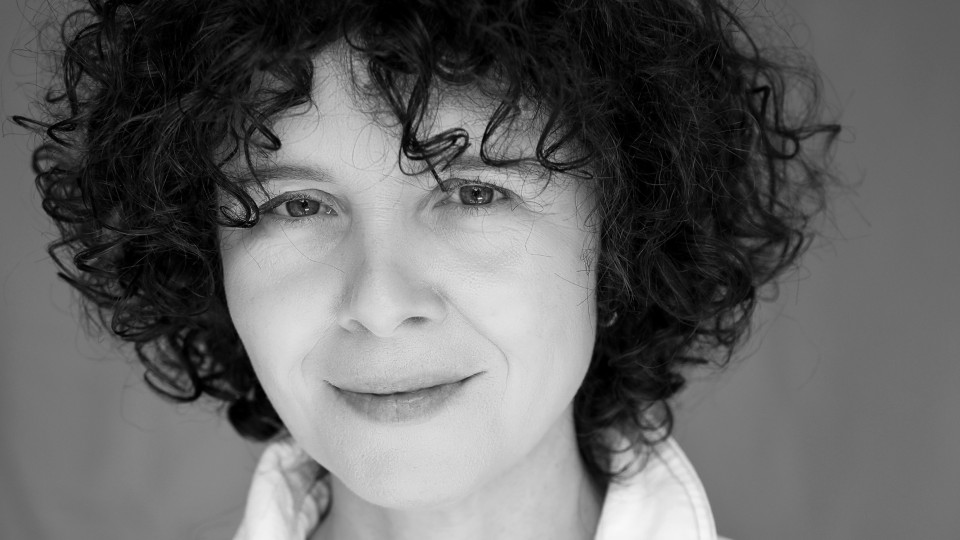
Interview: Karin Schiefer
Translation: Charles Osborne
October 2026