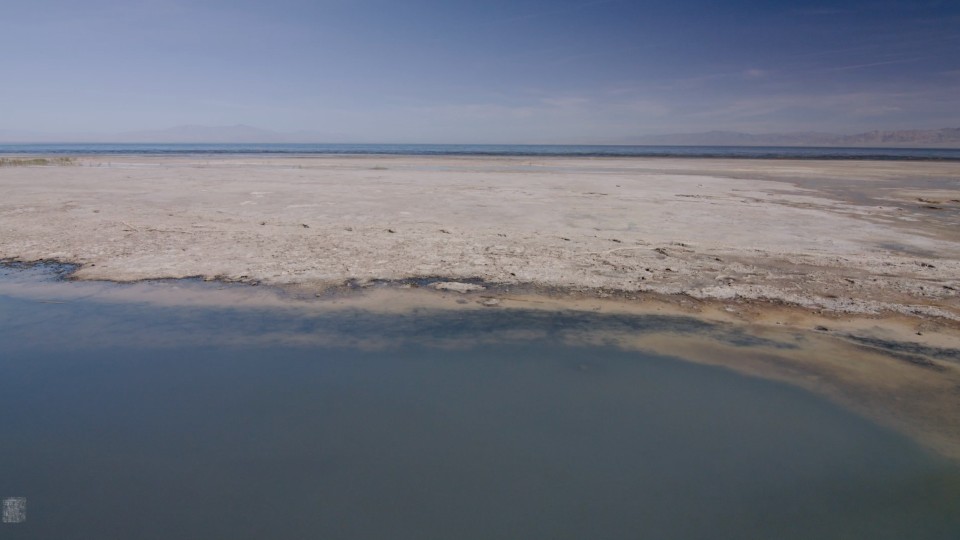
The Earth has become uninhabitable for humankind. There had been warnings: the scientists make clear statements about dwindling
biodiversity, climate change and, above all, the fatal monopoly position of mega-corporations. In her science fiction scenario
HUNGRY, Susanne Brandstätter interweaves an endangered present on the sound level and visual imagery of a desolate future without
people, and this hybrid view on the state of the planet makes the urgency visible and the first signs of action tangible.
HUNGRY is a film that focuses on scientific findings in the fields of microbiology, phytology
In a literal sense, the film
seems to bring together science and fiction. What prompted you to put the results of your research into a fictional context?
SUSANNE BRANDSTÄTTER: I actually started researching broader themes in 2016. At that time I was more concentrated on food supplements. That’s where
it took off from. Even in the early stages I was looking for a different way to approach the themes and was playing with a
whole lot of different ideas because I felt the topics could use something different to be able to convey what I wanted to.
The more I got into the subject, the broader it became and I started to see this whole chain of cause and effect. It went
on from being just about food supplements to about how our environment is impacted by large corporations and mega mergers.
So that's how the main theme developed. During the pandemic, when I was working on the project development, I was playing
around with ideas and all of a sudden it just hit me that I should position the whole thing in the future. I thought that
I could make a science fiction out of it and film a world where there's no humans left.
How far from now can we imagine this future to be?
SUSANNE BRANDSTÄTTER: Originally, I had it taking place in 2041. But then I decided to take that all out and to leave it very open. I think it's
better that way. It could be even closer. Unfortunately, during the time I was making the film, it seemed like reality was
overcoming fiction. Things changed drastically and natural disasters started happening around the world. Even way before that
I had the feeling that it was really urgent to make the film, but I did not get the impression that my sense of urgency was
shared.
HUNGRY has an audio layer that is based on interviews with of researchers and scientists. Your dramaturgical arc leads us
from a purely scientific point of view towards the political, economic and societal impact. How did you select your audio-cast?
SUSANNE BRANDSTÄTTER: As with every investigative film, you research a lot and then you have to narrow it down. It's not like I started with microbiologists,
not at all. I researched in lots of directions, for example also on fire, which, at that time, was not on everybody's mind
because there weren't such catastrophic fires by 2017. I also did a lot of research about the loss of insects, or the oceans
and in many different areas where things are just briefly touched upon in the film now. I used mind mapping and did diagrams
of cause and effect. A part of research was a lot of reading, but also talking to people in all the different areas and then
being passed on from one person to the next. I can't point out a precise starting point. I wanted to make a film that was
connecting the dots between so many different things. I had a huge map of all these connecting dots. The question was: Which
dots do I keep connected and which do I have to leave out?
This sounds incredibly complex. Would it be fair to say that one of your main motivations was the lack of action on the part
of politics? Was your aim with this film to raise awareness of how threatening the situation is for humankind?
SUSANNE BRANDSTÄTTER: I felt the whole time that all these films that are being made about one specific environment-related subject weren’t getting
to the root of the problem. I admire people who are active in those causes, but at the same time I asked myself, given the
destruction of our habitats and environment: Why has it gotten that far? I wanted to get to the root of the problem, so I
kept researching until I found what I thought was the actual reason. The next step was: trying to see whether there is any
possibility to even do anything about this now.
Was that the moment you started to get in touch with political scientists, legal experts etc?
SUSANNE BRANDSTÄTTER: Yes, I talked to competition lawyers, anti-trust lawyers
that was the further development and research, still in the script
development stage, but at a point where I knew that's what I had to bring into the film. I was fortunate enough to have script
development stage one and two, and I really needed it because the subject matter was so vast. Then I brought in the science
fiction element by showing a world where there’s no humans left. I thought it would be a way to make an emotional impact in
combination with what you're hearing the scientists from the “past” say. The so-called past, obviously. And that's where the
concept was born with the idea of marrying these two levels with a future where we see no human life left and barely any life
at all, just some insects. I thought seeing that and hearing what all of the scientists are telling us, would make that hit
home. HUNGRY is maybe an uncomfortable film to watch. But I felt, this is the film I want to make because it needs to be seen
and heard. There are so many films being made telling us how to fix things. That's the way we human beings are: we think we
can fix everything. I'm not so sure about that. And I'm not so sure that's really a good idea, to always be so convinced that
we can fix everything. In HUNGRY we also hear from people who are trying to fix things, who are fixing certain things, but
who actually have the conviction, if we don't do something else it's not gonna look good for us. But I do propose a solution.
What turns out to be a very timely aspect of the concept is the fact that you keep the scientists, who are expressing uncomfortable
truths, invisible. This goes hand in hand with a mood of skepticism toward science among the population and reflects Donald
Trump's attempts to delegitimize universities. This must have confirmed your approach in a phase when you were already finalizing
the film?
SUSANNE BRANDSTÄTTER: It's crazy. Scientists are now in a position where they have to justify themselves about their findings. It's very disheartening
and upsetting for me, especially since I was born and grew up in the States. I never, ever thought that this would be able
to happen, like a lot of Americans thought this wouldn't be able to happen. While I was working on the film, things were not
as bad as they are now. But importantly, what we're hearing in HUNGRY is that there are laws that already exist that can break
the power of the monopolies and of the mega mergers – they just have to be enforced. People may not be aware of how these
huge companies keep merging and getting bigger and bigger, so that they supercede governments and have enormous power. But
there is the possibility of breaking them up. There is an international movement which is growing and becoming stronger.
Do they have any force of action, if governments are moving in the opposite direction?
SUSANNE BRANDSTÄTTER: I think there are different ways that can be used to take these mega mergers apart. Like Michelle Meagher says in the film,
“We can roll them back, the laws are there.” And basically, these foundational anti-monopoly laws were made in the first place
because of people coming together and saying We are not going to put up with this anymore. We, the people, every one of us,
we do have power. One of their biggest tools is convincing us that we're powerless by overwhelming us with so much shit that
we feel powerless. Maybe I'm too naïve, but I really think we can still do something so that we don’t careen toward the end
of the world.
Let’s shift to the making of the film. One gets the impression that there is an enormous technical involvement on both the
level of the image and on the level of the sound. Where did you find the images of deserted landscapes and buildings to translate
this dystopic world after humankind.
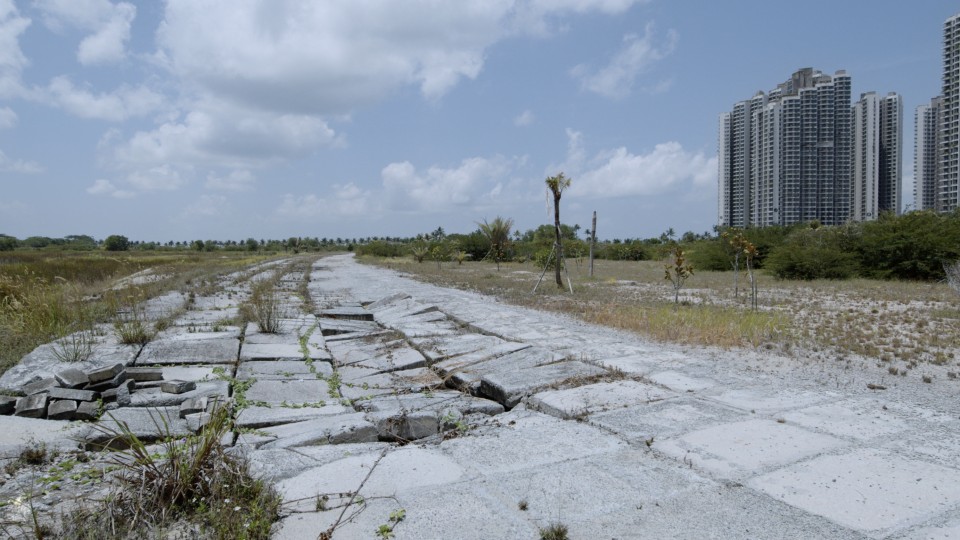
SUSANNE BRANDSTÄTTER: We shot in Austria, Germany, Spain, the United States and Malaysia. I did a huge amount of research in internet first. And
then I had location scouts. Where I had found certain things in the internet, I needed to know, Does it really look like that?
and What does it look like now? Some of these places I researched, they didn't look like that anymore by the time we wanted
to shoot.
Did you look for places after a disaster? Places where people had to leave everything behind right away?
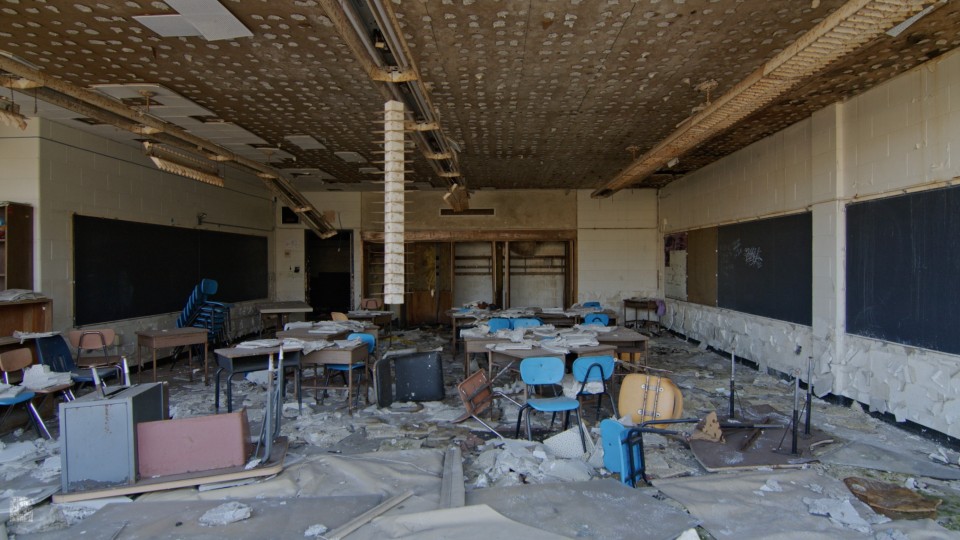
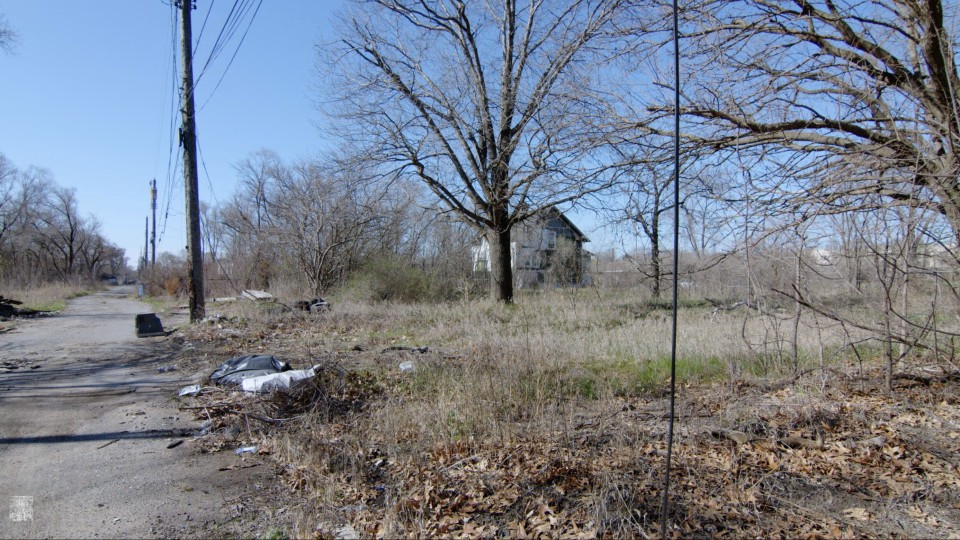
SUSANNE BRANDSTÄTTER: No. Actually, there wasn't a single place that I shot where a disaster had previously occurred. Things were very deserted,
but not completely deserted. We often thought we had a shot with no cars and no people, and all of a sudden when we were looking
at the material in the editing room, we saw there was a car driving through or a person walking through. I had found specific
cities, where I knew that there were whole areas that were kind of empty because the factories had closed down. So a lot of
people had left the town because their sustenance was gone. It just looks like no one was living there. Things were in disrepair.
We shot several schools that were completely abandoned and trashed. I told the fixer that I was looking for locations, where
you could imagine that people had left quickly. It wasn't easy finding these places, but sometimes we got lucky. We hired
a security team for a very deserted town, because it was kind of iffy and we were shooting with expensive cameras. The head
of the security company drove by to see how things were going. Thanks to him we could shoot a really fantastic location that
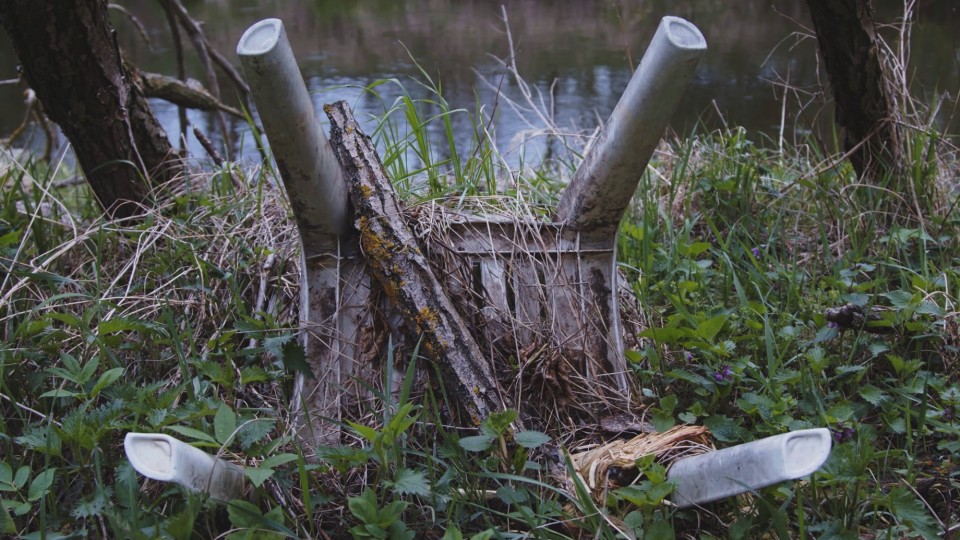
was nearby. Or all those dead animals we just happened upon. It was strange, it was really like that, we kept finding dead
animals, which is kind of scary when you think about it.
One very impressive element of your visual language is the fact that as a viewer sometimes one gets confused about watching
a micro- or a macrocosm. What about your ideas on the visual concept and the camera setting?
SUSANNE BRANDSTÄTTER: Joerg Burger was the DoP, Martin Putz and Lukas Lerberger did the gimbal and drone and what I called the special cameras.
One of the things I told the camera people was that I had this idea of finding similar patterns. I wanted viewers to sometimes
not be sure whether they are looking at a close up of something or looking at a wide shot. This was something I wanted to
use repeatedly, actually I did it less than I originally intended. With this in mind, we were looking for these parallels.
It's the way AI “thinks” – in patterns. That was one of the concepts that I wanted to translate visually.
Did you also find images while travelling? Did you develop an eye for what could look like a dystopian landscape?
SUSANNE BRANDSTÄTTER: Joerg and I discussed this again and again. We kept searching wherever we had the possibility to “create” images that conveyed
this desolate and deserted feeling. Sometimes we thought a shot looked completely deserted, but we were mistaken. When I looked
at the material in the editing room, I was finding things that we hadn't noticed during shooting – such as fresh tire tracks
in the sand. Certain things you can VFX out of an image without too much problem and other things are very difficult to do.
That was the situation while we were working on the film’s effects. In between time, AI capabilities have just exploded. Probably
a lot of the images that I wanted to use and which I thought we can't use, could now be easily processed by AI. We VFX-ed
cars and people and birds out, without using AI. And as I said, with some of the locations it was just luck. We found an abandoned
motorboat in the middle of nowhere, in a desert, far away from the water. Joerg had a wonderful eye for things like that.
He's a wonderful cameraman, a fantastic photographer. For example, while we were driving down a street, he spotted this abandoned
public pool along with a children's pool, where both were abandoned and overgrown with reeds.
The interviews represent the second essential layer of the film. Did you ever conceive the idea to talk to your interviewees
in person and film them, or was it always clear that you only wanted to record them on an audio file? How did you proceed
in creating this audio layer also in technical terms, as the “found interviews” sometimes sound slightly damaged.
SUSANNE BRANDSTÄTTER: It was always decided that we wouldn't go to interview the people directly. It fit in perfectly with the concept, finding
these old sound interviews from the so-called past. I did all of the interviews over Zoom. In reality, it was more complicated,
because of course we didn't just use Zoom. We had to send high quality mics to all of the interview partners and we also did
remote recording. What we thought would work out without too much problem, turned out to be extremely difficult. We recorded
with a laptop, which was being sent from one interview partner to the next, together with the mics and the headset. One time,
one of the interview partners received everything, but then went to another city and forgot the laptop, mic and headset at
home. I needed the equipment not only for the interview with her, but also for the next interview, which was scheduled in
the same city. So I had to postpone both interviews and then find a way of getting the equipment to the next interview partner.
I had somebody in the United States who was helping with the logistics, but I still had to make a lot of phone calls at 2:00
in the morning etc. With some delay and some rescheduling, we managed to get the equipment from one person to the next. But
then there was the following person, who lived so remotely that the courier service couldn't find his place. They kept trying
to find his house, but by the time he finally got the package with a delay of several days, the laptop battery was completely
empty, and the interview partner before him had lost or forgotten to pack the laptop charger and the mic... It was absolutely
insane.
A sustainable approach and its “costs” ...
SUSANNE BRANDSTÄTTER: You’re mentioning “sustainable”, which was also part of the concept that I wanted for the film. I said Why travel to each
person? when, what we need from the interview partners is basically audio. I had so many reasons to do it that way, also for
reasons of green filming. To travel to each interview partner would not have been sustainable and would have cost a lot of
money besides. It really was the best way to do it. But it was excruciating and difficult. There were very crazy things happening
that didn't make things easy.
Once you had collected – against all odds – the interviews on audio files, how did you proceed during post-production, adding
the foley department, music
, in order to create this complex acoustic layer?
SUSANNE BRANDSTÄTTER: Obviously, there were different people working on different parts for all the special sounds. Andreas Hamza made the nice
crackling sounds on the interviews and that was further worked on by the Menura Film team with Nora Czamler who did the mix.
Peter Kutin and Rojin Sharafi did wonderful sound design and music. Florian Kindlinger also contributed a lot to all of effects.
I had a lot of exchange with Peter Kutin and the editor Lisa Geretschläger already in the editing room. We were trying out
different things since we wanted a sound that gave the impression that the voices are coming from a recording. It was also
very complex to find how to make the Being’s presence heard and felt.
Can you give us an idea of the role the Being is playing in HUNGRY?
SUSANNE BRANDSTÄTTER: Originally, I didn't want to define the Being as much as I do. Because initially, I didn't want people to know whether it
was an AI or an alien or a survivor. My intention was to leave that completely open for the viewer. Of course I knew myself
what the Being was, I just didn't want to make it too obvious for the audience. But then I realized it made the film too difficult
to understand if I didn't define it more. The film is the Being’s film. HUNGRY, the whole film, is “shot by the Being”.
Can you give us an idea of the important steps of the editing process. I’m thinking of the fact that every interviewee only
talks once. How did you bring together the audio and visual level?
SUSANNE BRANDSTÄTTER: I had to find the right images to go with the long interviews. Basically I knew what order the interviews had to be in, even
though there were some variables. The general dramaturgical arc of the audio was that the interviews had to be in a specific
order, so that the cause and effect would be evident. Every person only talks once, that was part of the concept that I definitely
knew I did not want to change. At a much later stage, I played with the idea of flashing several frames of their faces. We
even tried that out, but then I decided to stick with the original strict concept that you never see anybody. So the dramaturgical
arc of the audio was more or less defined. But what was really difficult was the dramaturgy of the imagery, because it had
to mesh with the dramaturgy of the audio, but still have its own dramaturgical arc. We basically shot a documentary and the
film is obviously hybrid. Toward the end of the film you get the feeling that people can't have been gone very long. What
happened? It was about finding how to use all the moving parts. And then there's the final twist, the surprise ending.
What were your thoughts about the title HUNGRY?
SUSANNE BRANDSTÄTTER: Hungry, of course, has much more than one meaning. For me, it was always about greed. What I like in a title such as HUNGRY is all
its different connotations. The huge corporations are hungry for profit and amassing more and more, but even the microorganisms
are hungry, starving. And, of course it's also about nutrition, about our food and the whole food supply system, which is
so fragile. People often don't realize just how fragile it is and why it's so fragile.
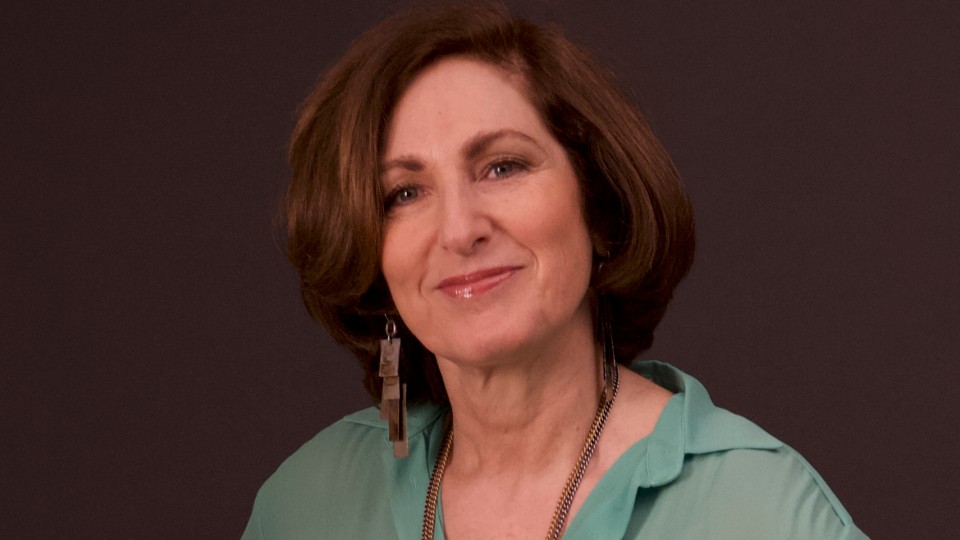
Interview: Karin Schiefer
December 2025