It is not only on the actual election day that the contest to achieve power is marked by unpredictability. When Harald Friedl
finished the first days of filming, his protagonist Andreas Babler was neither at the helm of Austria’s Social Democratic
Party nor Vice-Chancellor of the Republic. Initially, the film was intended to focus on him as a political grassroots worker
and mayor, but in June 2023 he became party leader, to everyone’s surprise, and was immediately faced with a general election.
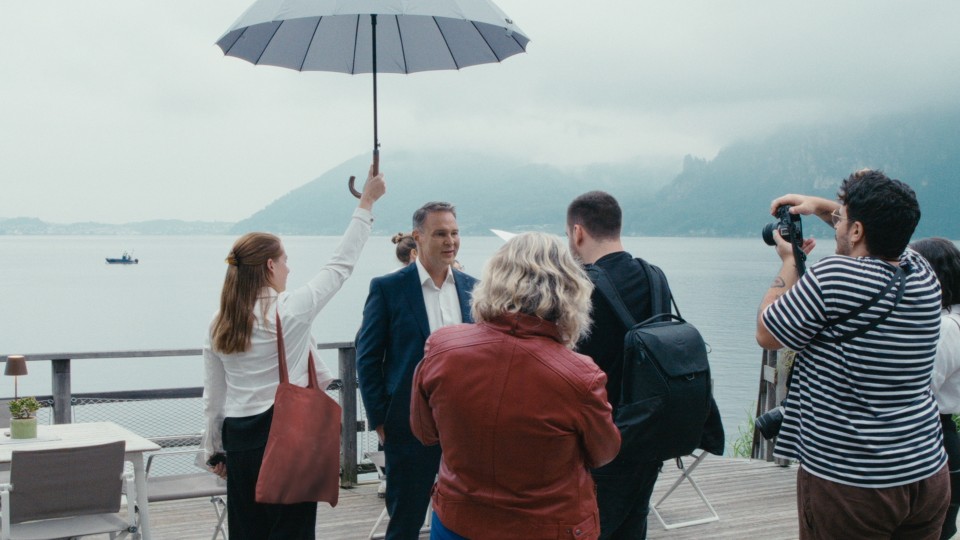
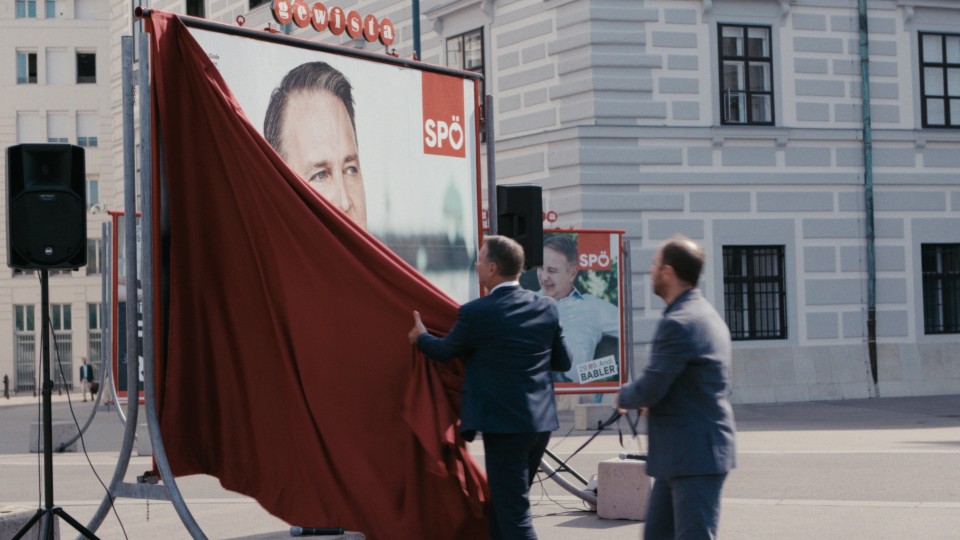
THE RACE accompanies a lone candidate and his team in the relentless pace of an election campaign, where the outcome is primarily dependent
on the merciless media battle between content and effect.
The most recent election for the National Council (the lower chamber of parliament) was held in September 2024. How long before
that election did you begin shooting THE RACE?
HARALD FRIEDL: Almost a year and a half. In March 2023, Andreas Babler announced that he was standing for the position of Social Democratic
Party chairman. I thought that was very bold; I regarded him as an extremely unconventional candidate. He didn’t correspond
in any way to the image of a power player in politics. He’s a politician with street credibility, a mayor, a grassroots worker
who has bypassed the power structures within his own party. He has advocated policies guaranteed to antagonize the most powerful
people in the country, such as inheritance and wealth taxes or the reorganization of media funding. So initially, for precisely
these reasons, I assumed that he stood no real chance of becoming party chairman. I talked openly with him about that and
suggested that we make a film portrait of him – which would also feature his return to Traiskirchen, where he’s mayor, after
failing to be elected.
Nobody expected Babler to emerge as the winner in the run-off contest for the post of party chairman in June 2023. I had to
abandon my plan A, which was to make a documentary about the Mayor of Traiskirchen. From then on, we were looking at a politician
who was determined to become Chancellor.
For the first six months of filming, we didn’t have a budget at all, and for the next six months we had a small project development
grant. Financing was not guaranteed until a year after we started filming.
The first requirement for making a documentary about an election campaign would seem to be a willingness on the part of the
protagonists to show their cards. Did you encounter that willingness?
HARALD FRIEDL: Before Andreas Babler became party chairman, I got to know his team. All young people, very motivated; I was impressed. It
was fascinating to watch what goes on inside that team as they try to formulate and communicate content – which fails repeatedly
during the film, because that’s not what public perception is about. Most of the media were very prejudiced against Andreas
Babler, and still are. Andreas Babler and his team agreed to participate in the film on the assumption that after the election
to choose the party chairman, it would develop into a portrait of the mayor. At some point during the shooting, it became
clear that there would be no pivot, and instead we would carry straight on to the battle for the highest office. But we didn’t
have to renegotiate the first agreement we reached. We, the producers and director, were able to use the material as we saw
fit, and the Social Democratic Party had no power of veto over what we filmed or how we edited it. We showed the film to the
participants before it was released. No one tried to influence us in the slightest, even though some sections are not very
flattering. All in all, the film is not a heroic story; nobody is idolised. The people are all filmed, unfiltered, as they
develop their ideas, showing their feelings as they go about their everyday work.
Running an election campaign involves a packed schedule for months. How did you find a place for your film crew in these confined
spaces and unpredictable situations, when things were quite literally in constant motion?
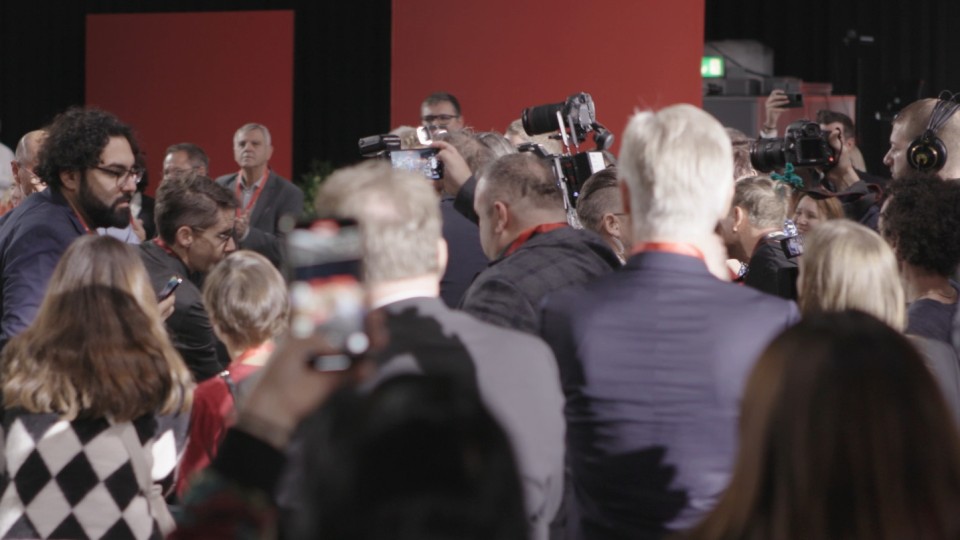
HARALD FRIEDL: The closer we got to election day, the shorter our timeframe was for shooting. We often turned up without having done any
preparation and not knowing what to expect. We frequently found ourselves filming several people in a very confined space.
I had to decide who to point the camera at, and Max Smoliner – the cameraman – had to find a position where he could be reasonably
flexible. Usually, his only option was to use a handheld camera, either because there was no room for a tripod or for the
sake of flexibility. My job was primarily to follow the conversations and sense who was about to speak, so Max could point
the camera at that person in time. But capturing the sound was the hardest part. There was hardly ever time to give someone
a clip-on microphone. We had to use boom mics, and we would position wireless mics around the rooms. Sometimes I would whisper
something to Max, sometimes I’d communicate with gestures or by mouthing words.
THE RACE accompanies and observes Andreas Babler, but the focus is also very much on the small team around him. There is an
interplay between the loneliness experienced by the candidate and his dependence on a close circle of staff, who also provide
him with inspiration. What insight did you gain from these observations at party headquarters?
HARALD FRIEDL: I thought his team was great! Without these people, the film wouldn't be what it is. We wouldn’t have been able to create
a lot of the introspective scenes which are crucial to the film. In fact, I found it an inspiring experience to be around
such committed young people and see how passionate they are about politics. They are concerned with issues, with content and
they are all waging a genuine battle against the ultra-right. I myself wouldn’t have expected the dramaturgical structure
of the film to focus so strongly and consistently on the fight against the far right. Politics generally has the reputation
of being kind of shady. In this team, we see a group of people with integrity and convictions, whose actions are rooted in
their values rather than self-interest. And the whole time I was expecting a spin doctor would show up. But that simply didn’t
happen. What the film shows is all very "homegrown" and authentic.
What the film brings out is the conflict in politics these days between long-term content and short-term media strategies.
Media effectiveness is clearly decisive. Do long-term socio-political strategies no longer have a place in a landscape currently
dominated by fast media?
HARALD FRIEDL: In the context of this election campaign, all that mattered about Andreas Babler was his appearance. He didn’t meet people’s
expectations of what a future Chancellor should look like, or behave or sound, so he had a difficult time right from the start.
As one of Babler's supporters said at one point: "If he showed he could walk on water, some people would just say Babler can't
swim."
It’s true that THE RACE is also a film about the political landscape in Austria. Long-term socio-political strategies seldom
feature, partly because creating social policy would require having ideas for a better future and pursuing them consistently.
And although people often know what’s necessary, they don't do it.
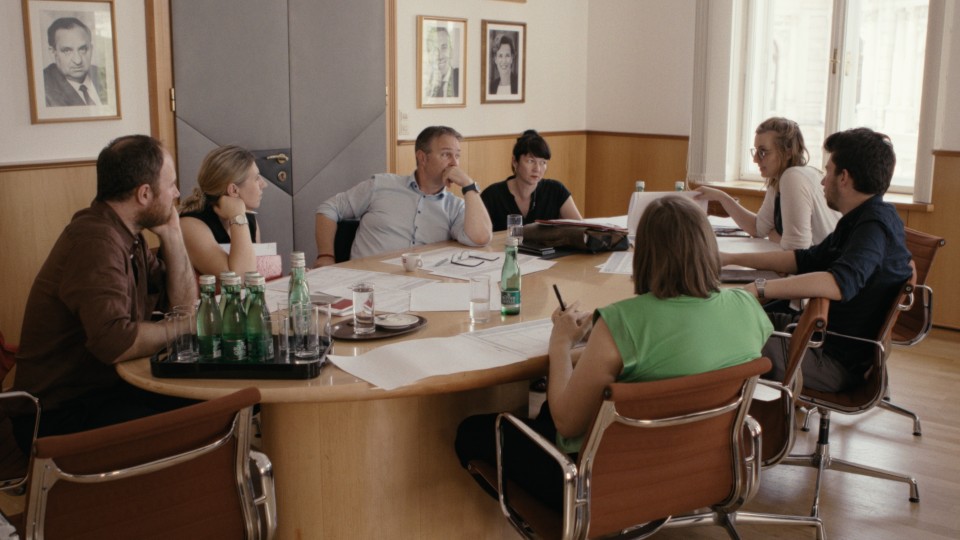
It’s interesting to see footage from the party headquarters, where portraits of former party leaders can be seen in the background,
including those from the heyday of the Social Democrats. What associations do those images have for you? What legacy has dictated
the current state of the Social Democratic Party?
HARALD FRIEDL: The first thing that occurs to me in connection with these past images is that politicians in general are respected far less
than they used to be. Today, anyone can drag someone through the mud in the media without ever having to take responsibility
for what they are doing. And people who have never had to face any challenges themselves express contempt for politics. In
my view, being a politician is such a serious vocation that everyone, from the mayor's office to the Chancellor's office,
deserves respect for taking on that responsibility and trying to make the best of it. It's a tough job. When it comes to the
widespread criticism of politicians' salaries, I am reminded of an article in Die Zeit about ten years ago, where the CEOs
of the largest DAX-listed companies in Germany were asked whether they considered their salaries were justified. The money
involved ranged from 1.5 to 15 million euros a year – not including bonuses. I just think that in view of the responsibility
politicians have to bear, we should consider whether the payment they receive is appropriate. They are well paid, but certainly
not overpaid. My film also shows how hard politics is and what you have to put up with when you leave yourself open to scrutiny
in that way.
What the film makes clear, beyond the harshness of an election campaign, is that the Social Democratic Party is virtually
incapable of reaching the majority of people with appeals for greater social justice in a society where the effects of capitalism
are now being felt so strongly.
HARALD FRIEDL: I believe the Social Democratic Party has failed to resolve problems in many areas. For example, the issues caused by the
large number of children with difficulties with German, especially in Viennese schools, have been downplayed for too long.
It makes you wonder what has become of the core competence of social democracy if a wealth and inheritance tax can’t be pushed
through. At the same time, it is legitimate to point out that the other parties don’t contribute here. Today, technological
advances in society are creating mounting uncertainty, which in turn makes it easy to stir up resentment – and right-wing
parties benefit from that. Many problems don’t have simple answers or solutions; you just have to accept that. Which also
means accepting that only small steps and compromises are feasible, not dramatic transformations. Perhaps politicians have
also made the mistake of exaggerating their own power, as though everything could be solved by politics... Only to be forced
to admit in the end that not everything can be solved.
Interview: Karin Schiefer
April 2026
Translation: Charles Osborne