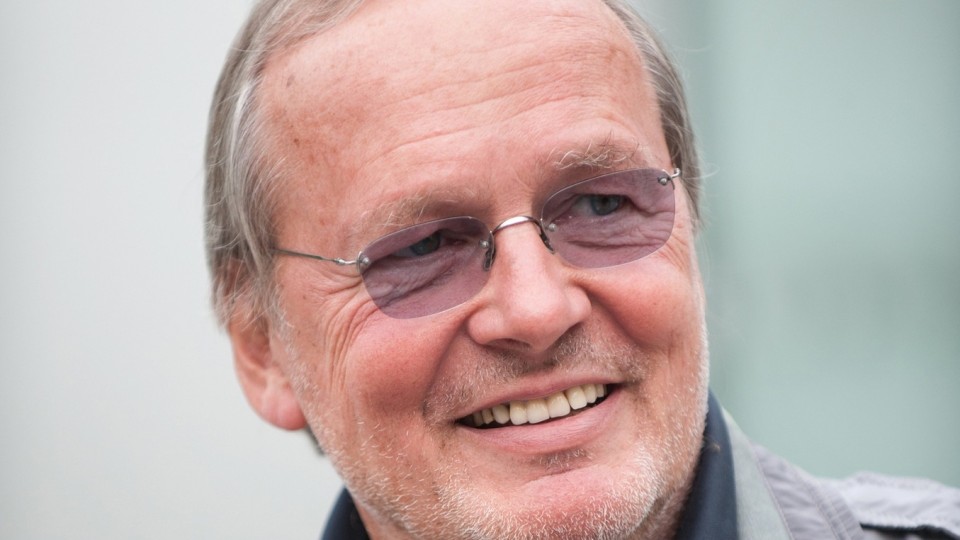
Illness, healing and health care systems have preoccupied the filmmaker and science journalist Kurt Langbein for decades.
In 2012, he shared his account of being successfully treated for cancer in the TV documentary Miracle Healing. Now, in his
highly personal feature documentary DYING FOR BEGINNERS, he explains that the illness has returned and depicts his showdown with mortality. In the context of today's high-tech medicine,
he also appeals for a view of life that again accepts death as part of being human.
How are you doing at the moment?
KURT LANGBEIN: Not too bad at all, and still better than my test results would suggest. Let’s hope it stays that way.
In the TV film Wunder Heilung (Miracle Healing, 2012) you address your cancer diagnosis and the subsequent successful treatment. You begin your latest cinema documentary,
DYING FOR BEGINNERS, with scenes from that film. The cancer came back a few years ago. What considerations prompted you to
incorporate your previous works and to accompany this personal experience on film?
KURT LANGBEIN: Immediately after my first overwhelming diagnosis, I did something I’d never done before: I started keeping a diary. People
close to me encouraged me to expand upon that, and it flipped a switch in me. Until then, I had deliberately avoided the overly
personal in my work. But that learning process brought with it the awareness that it’s also my task, as a journalist and a
filmmaker, to draw the attention of the public to major health issues like this, which are essentially similar for a great
many people. At that time, I was still inspired by the hope that my immune system would be able to cope with this cancer.
Five years after the first diagnosis, I was considered cured. I perceived that as an impulse to change my life. Unfortunately,
the idea that simply making those changes would result in long-lasting good health turned out to be an illusion. You can make
a small contribution, but you can't buy a ticket to a permanent cure anywhere. The disease gradually found its way back inside
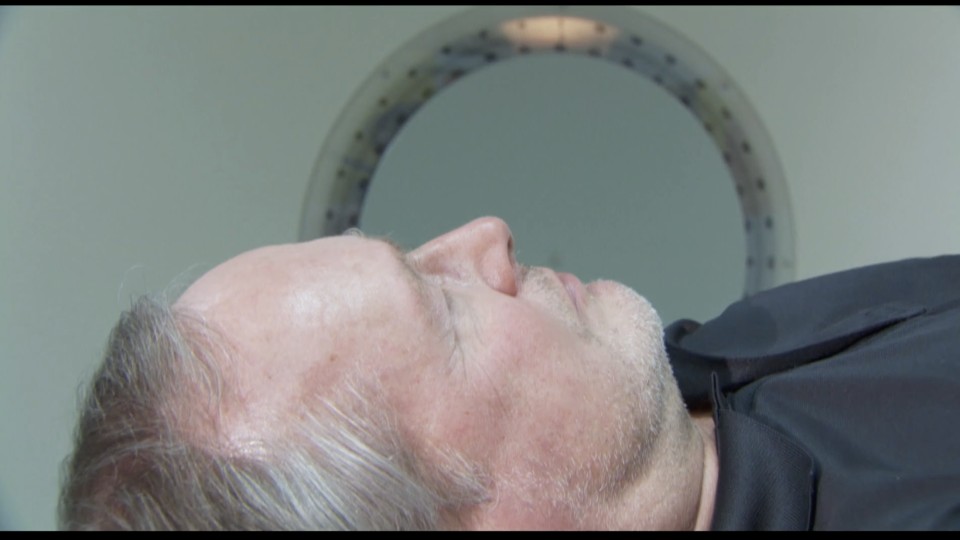
me. For over ten years, the doctors managed to keep the metastases small, especially by using medical technology. But at the
end of 2023, they told me that while the progress of the disease could be slowed, it could no longer be reversed in the long
term. That was a real bolt from the blue. From that moment onwards I was no longer dealing with the subject of mortality solely
as a science journalist but also as Kurt Langbein himself.
The title DYING FOR BEGINNERS conveys a popular scientific approach in a positive sense, and it also implies a learning process.
Is dying something that can be learned? Should be learned?
KURT LANGBEIN: Over the last few decades in particular, we have forgotten how to live with dying, because we’ve banished dying and death
from our lives. The people who leave us immediately vanish from our sight and are exiled to cold storage facilities; at the
funeral, which often takes place two or three weeks later, we say goodbye again. And then we need grief seminars, because
we’ve forgotten how to deal naturally with the transience of human existence. It would help us to be aware that we’re novices
when it comes to the subject of dying. You can learn a lot from confronting the issue, you can take a lot from other people,
and above all, facing your own fears enables you to gain a certain familiarity with the subject that undermines the fear.
It was a painful but very valuable process. My hope is that a lot of people will respond to this impulse.
At the beginning of the film, you explore some very fundamental questions, such as the definition of illness or health – which
is determined in Western medicine by whether measured values fall within a range considered normal. Do you think this view
is too narrow?
KURT LANGBEIN: Without a doubt. I have pointed out in films as well as books that all advanced human civilizations developed a holistic concept
of health and illness. In addition to the well-known Traditional Chinese Medicine (TCM), there is also a Traditional European
Medicine which adheres to this concept. But as technological progress advanced, the baby was thrown out with the bathwater.
In our eagerness to comprehend the mechanical at last, the conviction prevailed that only the mechanistic approach is significant
for human life. That is a mistake. And attitudes are changing now. It’s just a pity that we have to travel such a hard road
to regain holistic understanding.
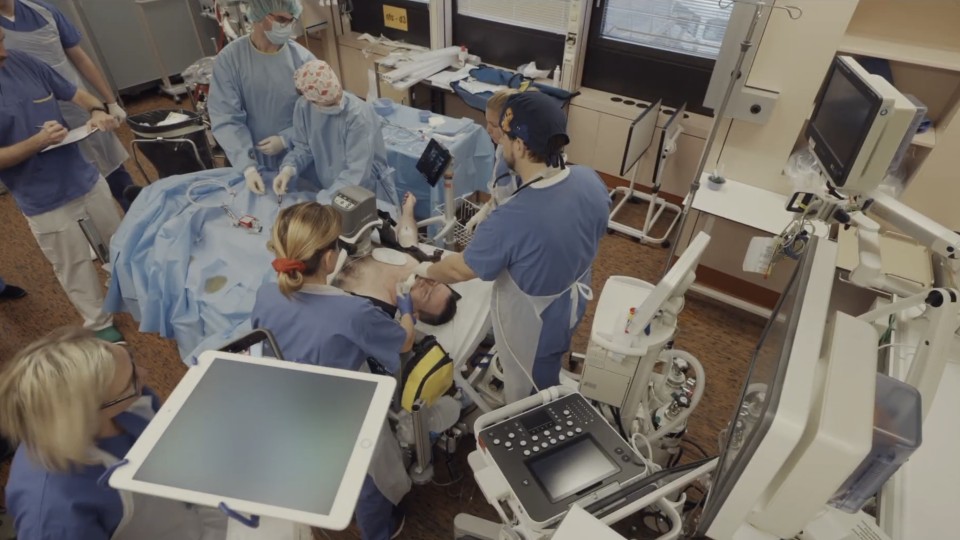
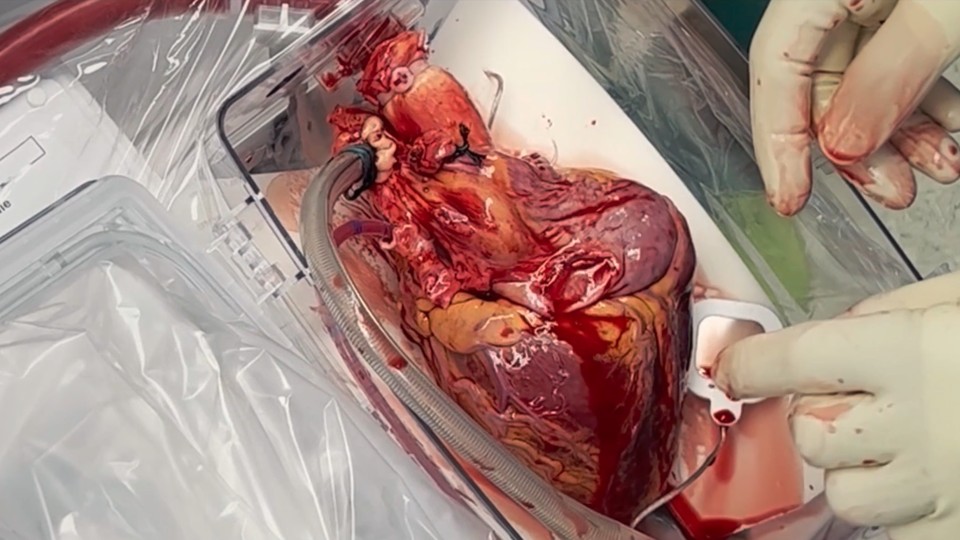
Among other things, you consider the practice of intensive care, which is applied because society wants life to be prolonged,
even when it’s not necessarily in the interest of the people involved.
KURT LANGBEIN: This issue has been on my mind for a long time, because several people who were very close to me died after long periods
in an intensive care unit. It’s one consequence of mechanistic thinking, and it leaves the highly trained "mechanics" at their
wit's end – you can see in the film how much empathy the teams in intensive care units have towards their patients. They simply
can’t meet the demands of society, which places far too many people in intensive care. In Germany and Austria, one in ten
people die while attached to breathing tubes in intensive care units. Nobody wants that, but it still happens.
What do you feel should be priorities in our current medical care system?
KURT LANGBEIN: The desire to do everything possible often means that we forget what is necessary: humanity should be a basic principle.
Palliative medicine means putting a coat around a person. Actually, all medicine should be like palliative medicine, but unfortunately
it isn’t that way yet. And we should learn once again how to deal with dying. We should create spaces for grief and allow
closeness to death. Grief is an elementary process that doesn’t take place according to a specific plan; it needs a longer
period of time. A lot of good things have happened in medicine, but there must be a better appreciation that quality of life
is more important than months or weeks gained.
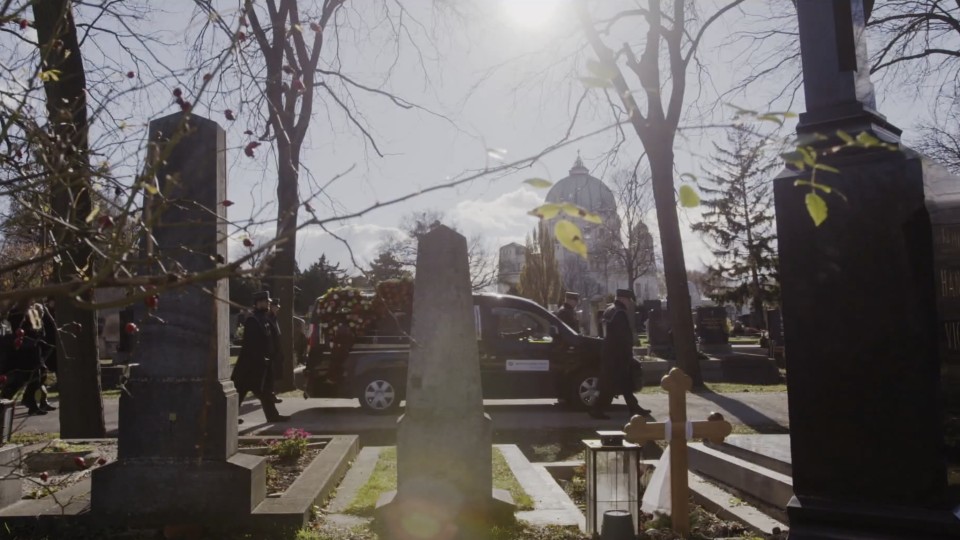
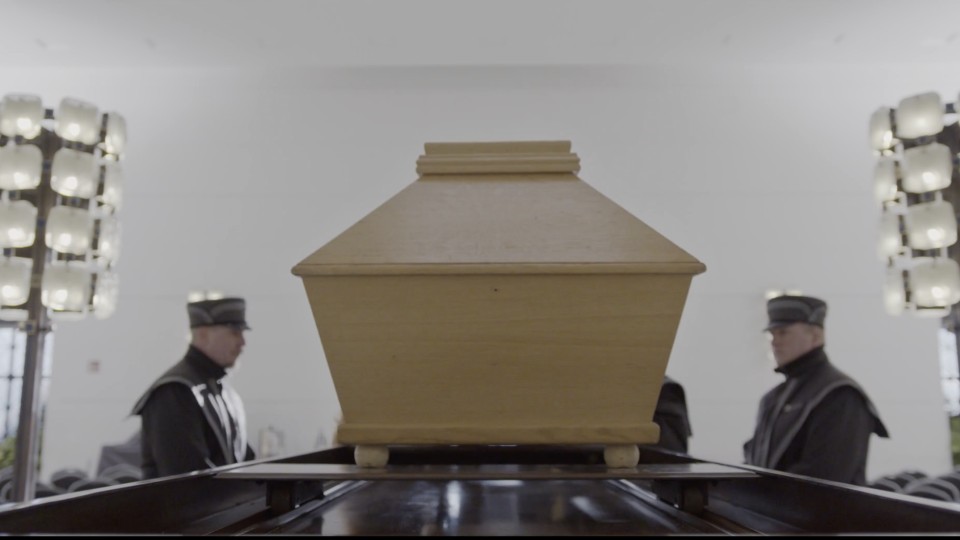
Parallel to the scientific level, the film has a personal and perhaps fictional level: there are scenes of a friend's funeral,
which can also be read as projections of your alter ego. Is it in these scenes that you also give space to the emotional component
of grief, alongside the factual elements?
KURT LANGBEIN: Franz represents a good friend who did actually die under these conditions. The development of his character goes beyond
a straightforward account. The sequences in the film also contain fictional elements, because I had already written some scenes
before Franz died. It was only through his death that they became so tangible and authentic. And yes, they are also projections
of my situation to a certain extent, because the path he had to take is closely related to the path I also have to take. For
me, the fear of dying and of death has largely disappeared. What remains is the grief about the inevitable loss of my loved
ones. In the funeral scenes, I also tried to make my pain relatable.
There’s also a third level, where you approach people who provide help and information about the mental aspects: a person
who is dying, an individual who is considering assisted suicide, and people who have had near-death experiences. Is this last
section focusing on a philosophical examination of the subject?
KURT LANGBEIN: The path I describe in the film is also my personal path. It leads to the realization that there’s a universal consciousness,
and I only live for a while in my personal form of consciousness, which is derived from that. In a sense, that’s comforting
and empowering.
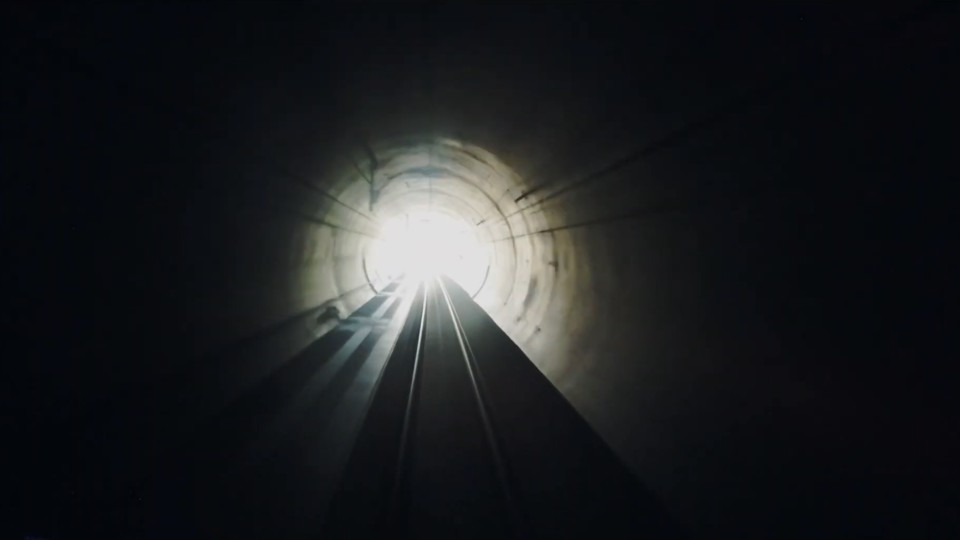
Near-death experiences are proven elements of all cultures. They go far beyond us and what we comprehend as identity. I investigated
the subject about 25 years ago. At that time, it was still regarded as a delusion and was treated as such. In the meantime,
these phenomena have been scientifically investigated. There have been various attempt to explain them, some neuroscientific.
People who have been dealing with them for a long time believe that these phenomena have given essential impulses for the
formation of religions.
You explore the subject of near-death experiences in detail, meeting three people who have encountered them and a scientist.
What insight did you achieve?
KURT LANGBEIN: These encounters have wonderfully joyous associations for me. The stories have had a very positive influence on the way I
think and feel. These people and their experiences have the ability to remove the panicked fear of dying and death and to
let us take a friendly and hopeful approach instead. They impart a more comprehensive knowledge, beyond what physiology and
neurophysiology have taught us so far; a knowledge that is ultimately echoed in quantum physics and enables our entire understanding
of life and matter to be fundamentally rethought. It shows that a universal consciousness not only shapes matter but also
significantly shapes our lives.
People who have had near-death experiences report having observed themselves from outside their bodies. As a filmmaker, you
also have the opportunity to combine your own view with a perspective on yourself from the outside. In DYING FOR BEGINNERS
you combine a camera view with your inner experience. Was working on this film a helpful process?
KURT LANGBEIN: It was an important, sometimes painful process for me, one that was associated with my own resistance. Fortunately, colleagues
and friends kept pushing me, encouraging me at precisely those points to continue. There are at least five versions of the
film concept, which became progressively more personal and profound. I very much hope that when you see the film, you can
feel how important that process was for me.
Interview: Karin Schiefer
April 2026
Translation: Charles Osborne