Still in balance. Off balance. Back in balance. Many elements of our ecosystems are on a knife edge, and future scenarios
are bleak. Othmar Schmiderer's attention is devoted to the forces opposing this development. ELEMENTS OF(F) BALANCE explores organisms of resilience, strategies of repair and, above all, the symbiotic connections which have always been employed
by nature to ensure its continued existence in a "spirit of we", thus providing a forward-looking model for human interaction
with the planet."
Let's start with the title ELEMENTS OF(F) BALANCE and the play on words involving “of balance” and “off balance”. Humanity
now finds itself at a tipping point in relation to our ecosystem; did this provide the impetus for the film?
OTHMAR SCHMIDERER: There’s no doubt at all that something has slipped out of balance! There are projects that create a balance, such as the
Krameterhof, a permaculture farm in the Austrian Alps, which we show in the film, but on the other hand, a lot of things are
becoming imbalanced; we only have to look at climate change. Dystopian visions of the future would have been too easy for
us; there are enough films like that... We want to focus on a new awareness, where forgotten alliances are the basis for our
interaction with nature. The point is to see nature as a possible game-changer and show how we, as humanity, can shape our
uncertain future with it rather than in opposition to it. Our focus is the question: "What can we learn from nature?". We’re
still pretty much at the beginning; we don’t know or understand very much. We have reached a really dangerous point where
our continued existence on the planet is in doubt. We must finally learn to stop living like looters and instead maintain
a symbiotic coexistence with nature. The film focuses on possible alternatives in science, art and design – and also in the
DIY sector, where young people in particular are venturing into completely new areas and developing visionary ideas. The cinematic
episodes take us to various places on this earth: to breaking points and places of hope in equal measure.
You operate on the interface between old knowledge and high-tech innovation. What’s the rationale here? Can you sum up the
important stages of your research and discovery process?
OTHMAR SCHMIDERER: We started researching different ecosystems by wandering halfway around the world in search of sustainability and biodiversity.
Intimate knowledge of the workings of the living world is the prerequisite for any form of sustainability. We felt it was
important in the film to place traditional empirical knowledge in close juxtaposition with state-of-the-art processes – as
a cinematic experimental montage, so to speak. In these future experiential spaces, the relationship between tradition and
digital ecomodernity will no longer be either-or: increasingly, it will be both-and. We didn't want a linear narrative form;
instead, the film aims to show that the truly exciting "science" and "fiction" has been taking place here on our planet between
human and non-human agents for thousands of years. If you’re sawing through the branch you’re sitting on, you need more than
just a mental "rethink". There must also be a change in experience and perception, so the environment is perceived not as
external but as a cross-species "world of us". ELEMENTS OF(F) BALANCE regards itself as a narrative, depicting spaces of possibility
without scaremongering or wagging fingers.
What motivated the dramaturgical transition from the local to the enormous dimensions of projects in China and the Danube
Delta?
OTHMAR SCHMIDERER: Even though pollutant emissions in China are still enormously high, China is already a leader in sustainability and will
dominate the sector in the coming years. There are spectacular examples which speak for themselves, such as the gigantic reforestation
project in the Gobi Desert, which has been under way since the late sixties, and the futuristic dimension of solar energy
plants with solar thermal power plants. The speed and extent of sustainability projects being pushed forward in China is impressive.
China alone uses more sustainable solar energy than the rest of the world put together.
The Danube Delta is the largest wetland in Europe, with a whole range of dynamic ecosystems, and alongside the effects of
climate change, efforts at rewilding are also evident here. In Ukraine, despite the war, the Soviet-era dams are being opened,
so the delta is again flooded more extensively, which halts desertification. In the Romanian area of the delta, where people
are struggling with both drought and the decline in fisheries, our attention was focused on sturgeon, a protected species
millions of years old; efforts are being made to re-establish the fish throughout the Danube region.
I believe that when you become involved in this subject, you inevitably move from the micro to the macro cosmos, to comprehend
the links between the different aspects. We felt it was important to find a poetic, cinematographic form. Everything is connected
to everything else, no matter what the dimension. And perhaps the essential aim of the film is to show that the mechanisms
of collaboration in nature which we need so urgently have in fact been in existence since time immemorial.
You capture visible nature on film – often using drone shots to convey the incredible expanses involved – while at the same
time you explore invisible nature in underwater worlds, and in particular with fungi. Were you exploring this opposition to
provide a dramaturgical impetus?
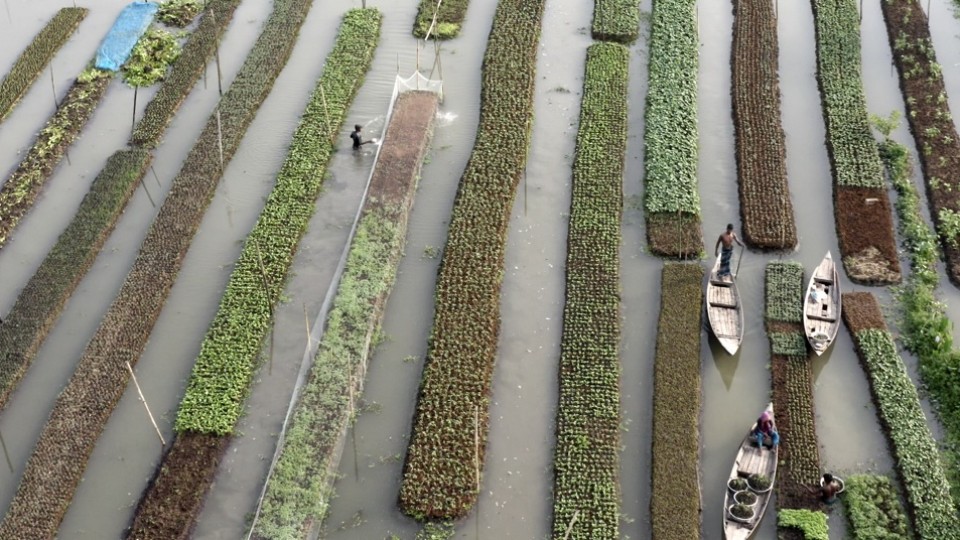
OTHMAR SCHMIDERER: Using a drone is a separate issue, and we had a lot of discussions about whether to do so, and if so, how... I think certain
landscapes, such as the Danube Delta and the mountain ranges in China, can only be comprehended from above.
In Arthur Summereder, we had a brilliant drone pilot who was ultimately also an editor; he handled this tool with great sensitivity
and care. Our aim was, on the one hand, to make the enormous dimensions tangible, but at the same time we wanted to raise
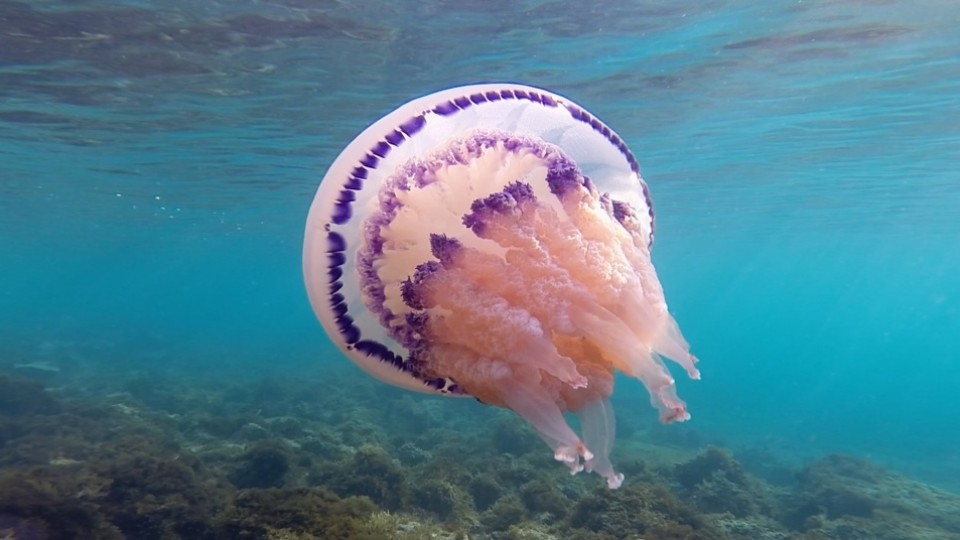
awareness of connections with our environment that we have lost. In the case of what might be termed "invisible" worlds, such
as those of jellyfish and fungi as ancient life forms, we were initially interested not only in the creatures’ diversity and
beauty but also in the fact that they have hardly changed genetically since time immemorial – and they’ve survived all extinction
events known to us, from meteor impacts to the last ice age. In contrast to the fragility of human existence, for these resilient
organisms, there seems to have always been an "intact" world. It still isn’t possible to predict the mass jellyfish blooms
which occur in specific locations by using scientific methods. The erratic way they sometimes appear and disappear has a mysterious
quality, almost as if they were creatures from a fantasy film. These ancient sea creatures prefer to dock on the very latest
man-made facilities, like oil platforms or plastic waste, for the purpose of reproduction. Fungi were among the first life
forms to reappear on contaminated soil after the atom bombs were dropped on Japan, and also after the Chernobyl nuclear disaster:
from a human point of view, this is a symbol of survival after disasters. It was exciting to see the enthusiasm displayed
by the international research community when conducting basic research in the field of fungi – which may well also prepare
the ground for future-oriented applications. These days, in an analogy to the digital branches of the Internet, there is talk
of a "wood wide web" among the remaining trees and meadows of this world.
One of the promising elements in this film relates to fungi; we learn about their benefits and function, and in conversations
with experts, you also capture the incredible fascination displayed by these researchers for this cosmos. How did you discover
this cosmos of fungi for yourself?
OTHMAR SCHMIDERER: Mycology, research into fungi, has gained considerable attention in recent years, reaching a wider audience with Merlin Sheldrake's
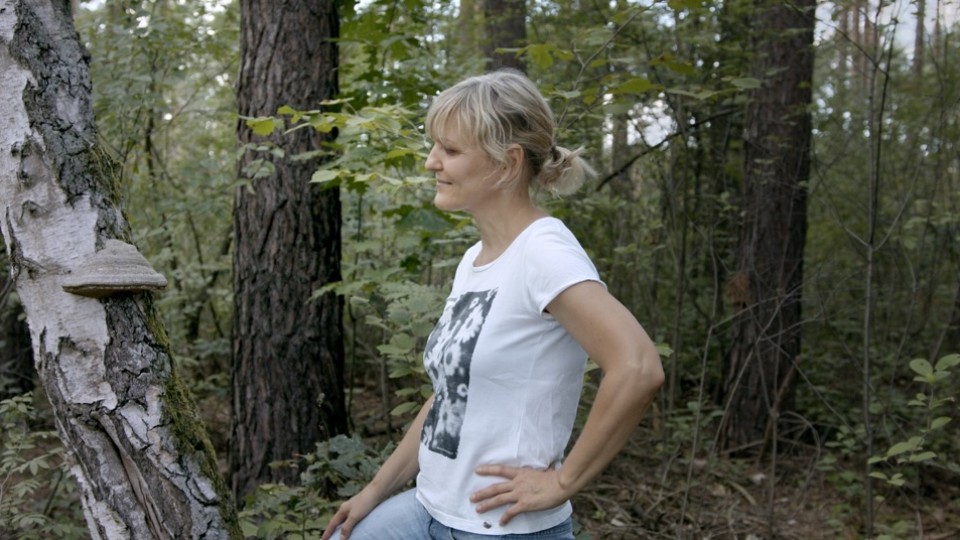
bestseller Entangled Life. One of our most important encounters was with the Berlin microbiologist Vera Meyer, who heads the
Institute of Microbiology at the Technical University there and is an enthusiastic researcher in this field. I no longer regard
it as utopian when she expresses the belief that in ten to fifteen years, houses will be built from fungus. Now it is a matter
of willingness and being open to technological progress. Meeting Maurizio Montalti, whose biotech company SQIM uses the intelligence
of fungi to produce leather, insulation and building materials, was also important. Innovative people like Montalti are networked
worldwide. Mycelium research is a huge field of research. Promising, visionary perspectives are emerging.
Several of the people you meet also point to sociological parallels in the functioning of fungi ...
OTHMAR SCHMIDERER: These modes of cooperation, transferred from nature to society, could be a model for us. At the moment, we are still dominated
by a very narcissistic worldview, which will be our downfall if we continue to act this way. Perhaps now we should look for
models in nature. The scientists we talked to certainly practice a different way of thinking and a different way of working.
They no longer think only in terms of "me". All these connections result from research into nature, where you see that it
can only work if we act together.
You place an episode from Greek mythology at the beginning of the film – the competition between the weaver Arachne and the
goddess Athena. Is this a way of touching on a second thematic arc, which deals with the issue of repair?
OTHMAR SCHMIDERER: You can see it that way, yes. Threads – torn and reassembled in the case of Athena and Arachne, or employed to find a way
through the labyrinth by Ariadne – symbolize fate in Greek mythology: life, orientation and salvation. In today's context,
the broken thread could symbolize the fragile web of ecosystems and natural connections that has been permanently damaged
by human activity. In this context, the myth underlines the consequences of arrogance and the inability to recognize greater
connectedness and symbiotic alliances in nature. Just as Athena, in her initial fury, tears up Arachne's tapestry but allows
her to continue weaving as a spider, so we are faced with the task of acknowledging the destruction that has been perpetrated
and committing ourselves to repairing and restoring our relationship with the environment.
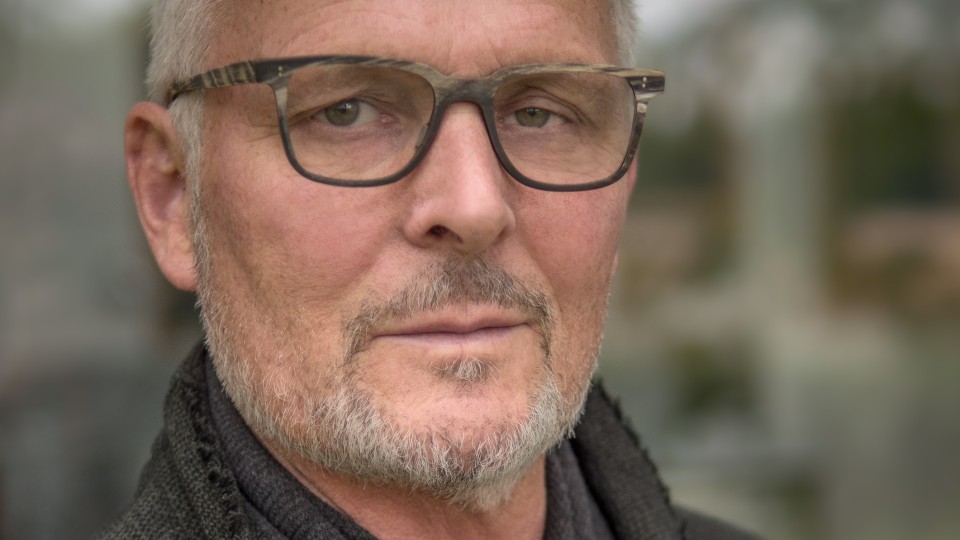
Interview: Karin Schiefer
November 2025
Translation: Charles Osborne