Vampires have descended on Vienna with nefarious intent. Eager criminologists, vampirologists and psychologists soon gather
at the scene, determined to avert a disaster. They seem unlikely to succeed. Ulrike Ottinger's ironic venture into the vampire
genre, THE BLOOD COUNTESS, has its roots in an extended journey from Berlin to Vienna. The bizarre and gruesome places she discovered on the way provide
the visually impressive backdrop for a satirical exploration of the city’s dark depths and the unfathomable power of evil.
Your title character is based on a real historical figure who has become the subject of numerous legends but whose life story
doesn’t actually have a dominant role in the film. What was it about this woman that fascinated, interested and inspired you?
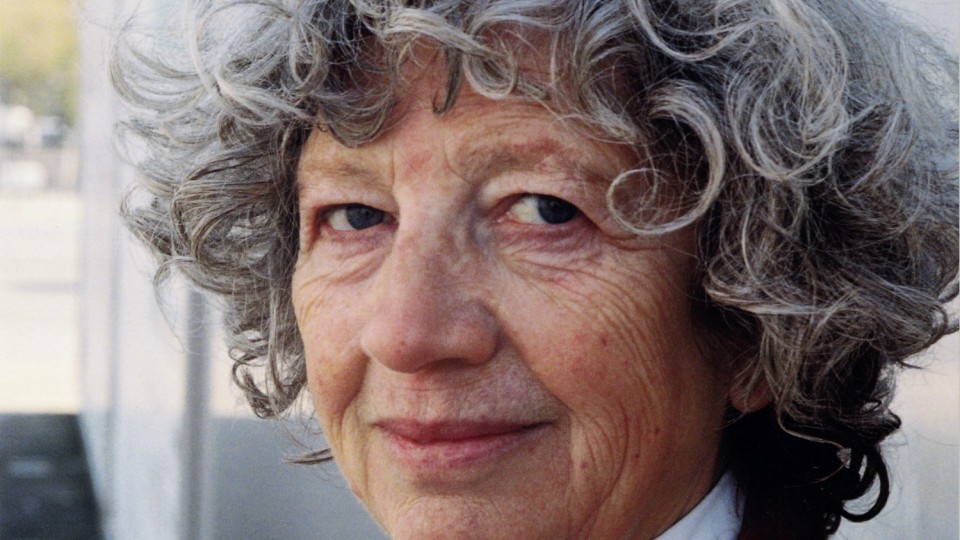
ULRIKE OTTINGER: It's the fact that so many fantasies have grown up around her. I really enjoy playing with that. We don't even know whether
the historical Countess Erzébet Báthory really committed the atrocities attributed to her, or whether the stories were rooted
in intrigues at court and attempts to seize her property, her money and her title. There is a nice line in the film where
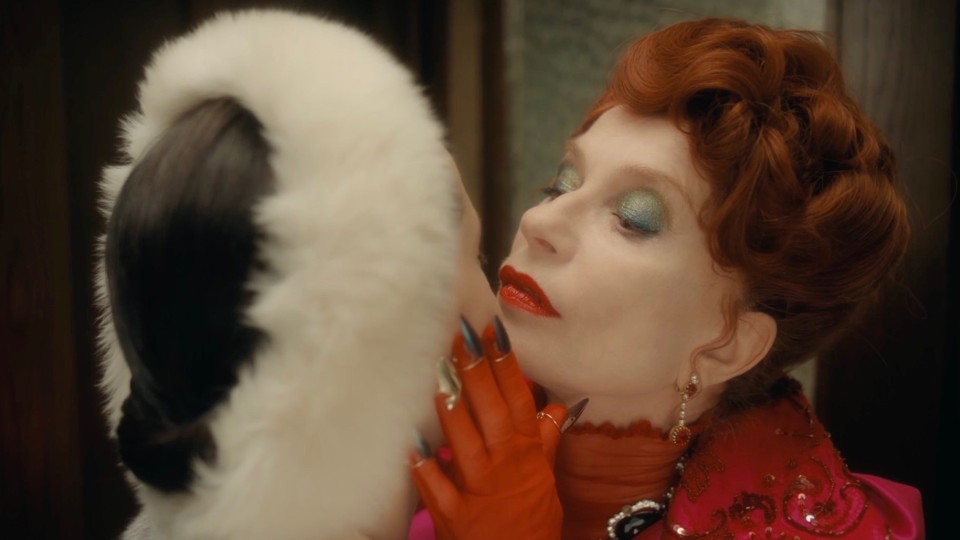
Isabelle Huppert, as the Blood Countess, poses a question: "Isn't it interesting that we are much more interested in the cruel
than the virtuous?"
It all begins with an impressive opening sequence: in blood-red splendour, the Blood Countess glides through a system of caves
on a barge. The underworld and the world above intersect here, past and present, carried by a powerful female force. What
were your thoughts on that first scene?
ULRIKE OTTINGER: I’d already sketched that scene in my version of the script from 1998. Yes, it demonstrates power. That can be interpreted
historically, when you consider that the powerful people in the world have always appeared in a central perspective, but it
also applies to the present; when you see on the news that double doors open, Putin walks through and everything freezes.
These power games have always existed, and at present we see them every day, heightened to absurdity. I’m interested in these
structures. The Blood Countess comes from the underworld, she has awoken from her sleep and makes a powerful entrance on a
large boat. And then something completely different happens. Suddenly we’re in the present, a tourist boat comes past, and
someone tells us that Hitler's miracle weapon was built here in secret during the Nazi era. And in fact, this already sets
the tone for the whole film, because it links structures of the past with structures of the present so as to pose the question:
What is power? Can power do anything? This is a subject that always has and always will concern us. The Blood Countess is
a figure who pulls the strings and determines the course of history. And adding wit and irony in small grotesque scenes doesn't
hurt at all.
The Seegrotte, the huge underground lake, is one of many iconic places in Vienna and the surrounding area where you filmed
scenes. To what extent are places sources of inspiration for you?
ULRIKE OTTINGER: I'm interested in places in general, and certainly in Vienna. It’s a city with a history. The nice thing is that you can
perceive the history in these places, if you approach them like a criminologist. Places are fascinating because you only have
to look a little closer for them to tell you a lot. That’s true of Vienna to an extreme extent. The story of the film began
with Viennese places. There was the Narrenturm, the Tower of Fools, which has a great story in itself, rooted in the first
reforms in dealing with the mentally ill. Places of exclusion are places with highly complex stories. The National Library
represents its period, in architecture, by virtue of the books that were collected there – and perhaps those that were burned
in the oven of the censors. Sometimes I would have liked to show more details of the places, but I had to sacrifice that to
create a condensed narrative. Some things don't emerge consciously but are still present in the scenes.
You worked with Elfriede Jelinek on the screenplay. Can you tell us something about your artistic connection to Elfriede Jelinek?
Are there other aspects of the film that reflect Austrian literature?
ULRIKE OTTINGER: Back in the early 70s, I performed in Vienna with wonderful people from the Austrian literary scene and became friends with
some of them. In 1998 I made a trip from Berlin to Vienna, and I decided I’d really take my time, meandering around. That’s
how I discovered some incredible places like Sedlec, where the bones excavated around the church in about 1860 were used to
decorate the entire interior of the church, including ritual objects such as chalices and monstrances. I had a look at such
incredible things on that trip, and the thought occurred to me that those places would fit very well into the genre of vampire
films. It was immediately after the trip that I wrote the script. I told Elfriede about it and asked if she could help me
a little with the Austrian. We met over a day or two and went through the dialogue. Then she suggested she could send me a
few things to incorporate in the script, if I wanted to. I linked a lot of those things with my own; it was very interesting
montage work. Elfriede is incredibly witty when she plays on words, where key moments arise from the very banal in an amazing
way. I know Austrian literature from this period quite well, and some of that found its way in. The old Café Hawelka, which
was once an important meeting place for writers, also makes an appearance.
As well as the vampire film genre, you also touch on others – there is an incompetent police inspector, a race against time
to defeat the forces of evil... You seem to play with genres without taking the conventions too seriously. How important was
this playful approach to you?
ULRIKE OTTINGER: Yes, Chief Inspector Disbelief: he made the mistake of not believing the unbelievable – if he had done, he might have succeeded.
I don’t treat the genre the way it’s usually handled. The story is based on couples: there’s the Blood Countess and her maid.
There is the young vegetarian vampire, who rebels against his family and may be the only character in the film that audiences
can identify with. Of course, he needs to be set straight, but his therapist is the greatest antitherapist imaginable, who
simply fails to appreciate his client's yearning to become an ordinary mortal. Then comes the element of science – or rather,
of apparent science – in the form of two vampirologists, who are very funny characters. They defy science in an almost Dadaist
way. Then there’s Chief Inspector Disbelief and his assistant Doppler, who imitates and admires him, and would love to rise
to the rank of Chief Inspector himself – but doesn’t. They add little intermittent side stories to the plot, enriching it
with comic elements.
THE BLOOD COUNTESS is an ironic take on the Viennese penchant for the nostalgic, and a subliminal link to the present can
also be perceived: I am thinking, for example, of the right wing student fraternities. Does farce strike you as the appropriate
artistic genre to challenge our time?
ULRIKE OTTINGER: The student fraternities have a long history. In 1998, I witnessed members of a fraternity meeting for a military remembrance
day. I took a photo and stuck it into my script. That has nothing to do with patriotism anymore; it’s merely about Us and
Them, adopting a disparaging attitude towards other people. This leads to a fascist ideology. Exposing something like that
seems the right thing to do.
In the film, the fraternity members at the Heldenberg Memorial show us that there’s no substance to their ridiculous behavior,
their pomposity. Since it’s a memorial to Field Marshall Radetzky, that also provides a connection to the Radetzky March and
the rest of the music in the film. I wanted to approach Viennese music in an unconventional way, and several people recommended
Wolfgang Mitterer to me. He had arranged about 30 Johann Strauss waltzes for a concert: deconstructed them, in fact. He was
kind enough to make that music available to me; he also composed pieces for the film and performs as an organist. I'm not
interested in showing the cruelty of a vampire movie, but in appealing to the imagination. When he attacks the keys as an
organist, you imagine the most terrible things. That's how film should be – opening up doors in the mind. I don't need the
splatter, the naturalistic effects. The interesting thing about film is that you can evoke things.
The cast of THE BLOOD COUNTESS is extraordinary, even in the minor roles. How did this casting come about, especially as regards
Isabelle Huppert?
ULRIKE OTTINGER: I'd been talking to Isabelle Huppert about this role for over fifteen years, which makes me even happier that it worked out
after such a long time. Birgit Minichmayer is a wonderful actress who can pull off something very few people can do these
days: she can capture the grotesque and the stylized but at the same time be completely down-to-earth. Playing opposite her
is Isabelle Huppert, who embodies a complete contrast. Of course, she can do everything too, and I think it was unusual for
her to have an iconic role; as a rule, she plays very psychological characters, and that’s not the Blood Countess at all.
Lars Eidinger, who plays the therapist, is a rebellious actor, which is wonderful for this role because he often comes up
with things. Some of them didn't work, while others were brilliant. It's about having the guts to try things out. As a director,
you just have to keep an eye on the whole thing. Karl Markovics is wonderful in his role as an old, long-suffering melancholy
character.
The development of THE BLOOD COUNTESS took a particularly long time. How have the images evolved over that period? How do
you feel now, when you see the result?
ULRIKE OTTINGER: I’m really pleased that the film is finished. Of course, some things have changed since 1998, but not the basics – by which
I mean the places. But I made the roles more detailed. I think there are 28 versions of the script, because I made several
attempts to get the project off the ground. There was a Romanian co-producer at one stage, and I would have found interesting
places in Romania as well, but luckily it turned out to be Vienna, as originally planned. Some interior scenes were filmed
in Luxembourg. The connection between exteriors and interiors has become very coherent: a brilliant achievement on the part
of set designer Christina Schaffer. The nice thing about this project was that everyone was really dedicated to their work.
I could feel that huge support.
Interview: Karin Schiefer
January 2026
Translation: Charles Osborne