Harald Sicheritz still remembers his years at high school and the sudden sense that change was in the air. People in Austria
who know the name Bruno Kreisky think of the 1970s, the heyday of Social Democracy and the Chancellor with the measured tones.
It’s less well known that he was born in 1911 into a well-heeled Jewish family and was by no means predestined to build the
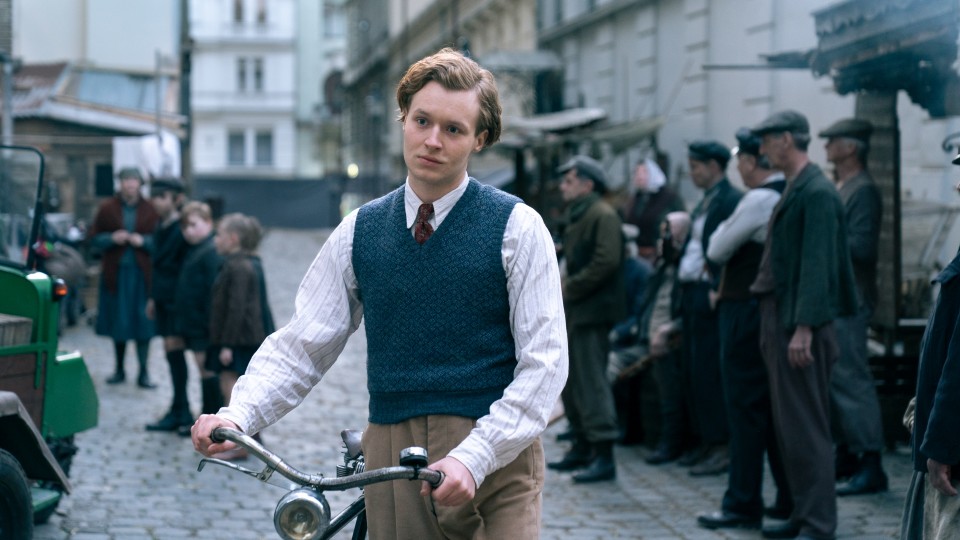
foundations of his political career in the Young Socialist Workers. In BRUNO – THE YOUNG KREISKY, the filmmaker focuses on Kreisky’s (political) coming of age.
Is the former Austrian Chancellor Bruno Kreisky (1911-1990) a politician who has a special personal significance for you?
Have you had him in mind as the subject of a film for a long time?
HARALD SICHERITZ: Bruno Kreisky had a very powerful influence on me, of course, as he did on all Austrians of my generation. In schools, this
meant dramatic changes. I was in the lower school, maybe in the 3rd grade, and everything changed quite abruptly. The old
Nazis – ladies as well as gentlemen – suddenly weren’t there anymore. We got a school parliament, a new principal. Later,
I studied political science, which meant constantly reevaluating the memories of my youth. This film project is connected
with my fundamental worldview. Over the last 25 years, I have been approached on a number of occasions with ideas for historical
films. I didn't want to devote my attention to these themes on film, not least because it would have required a cast based
on their similarity to so many well-known personalities.
BRUNO – THE YOUNG KREISKY is based on an idea by Fritz Schindlecker. What factors prompted you to focus on those years?
HARALD SICHERITZ: In late 2018, when Fritz Schindlecker suggested making a film about Bruno Kreisky, I shared with him the concerns I have
just mentioned. But he had a novel idea: we would concentrate on Bruno Kreisky between the ages of 16 and 27. He felt that
this period constituted an incredible adventure story which hardly anyone knew anything about. And the story really did turn
out to be as exciting as he promised. We brought contemporary historian and acknowledged Kreisky expert Helene Maimann on
board. That’s how the screenplay gradually came into being; it went through a lot of versions before shooting began in spring
2025.
Can you tell us about the research phase? Where were the most important archives? What essential "finds" were suitable for
inclusion in the film?
HARALD SICHERITZ: Most of the "finds", as you put it, were communicated to us by Helene Maimann in conversation. I’m quite convinced that Bruno
Kreisky is the best-documented Austrian individual; there are a huge number of books by and about him, with so much information
that it wasn’t possible to include even half the available material in a single film. We concentrated on the essential elements,
and we also talked to the few remaining contemporary witnesses.
You mentioned the "adventure story" aspect earlier. Were there events that demanded to be included in the film, that may have
been real revelations?
HARALD SICHERITZ: The screenwriting process was a constant oscillation between the current situation, with its own political dimension, and
what a writer can distill from the biography of a young person in the 1930s. Bruno Kreisky came from a Jewish family that
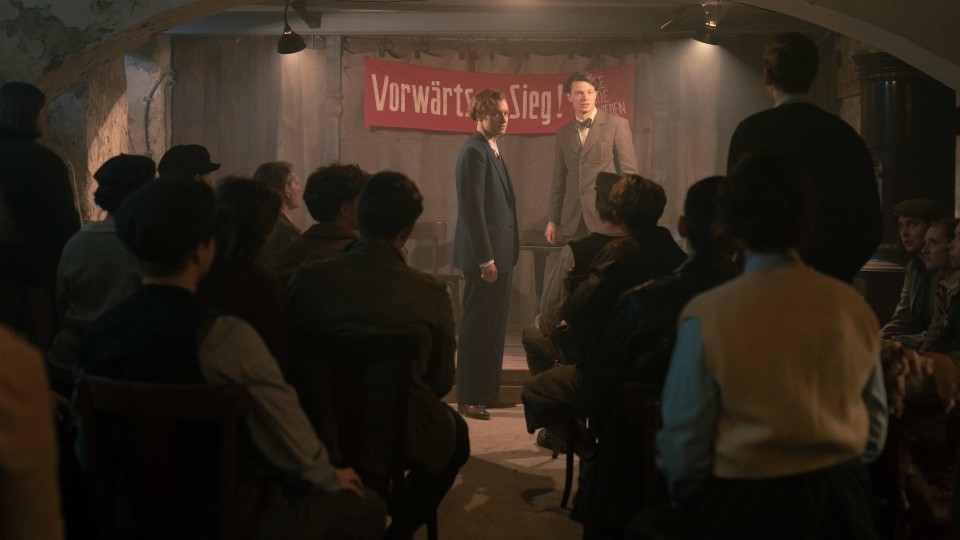
was very wealthy by the standards of the time, but he decided to join the Young Socialist Workers in order to make the world
a better place. And that’s what he does – despite all the obstacles. Throughout every aspect of Kreisky's life there’s always
one constant: it was never easy. But in the end, he prevailed. I think that's an exciting message to convey: you can change
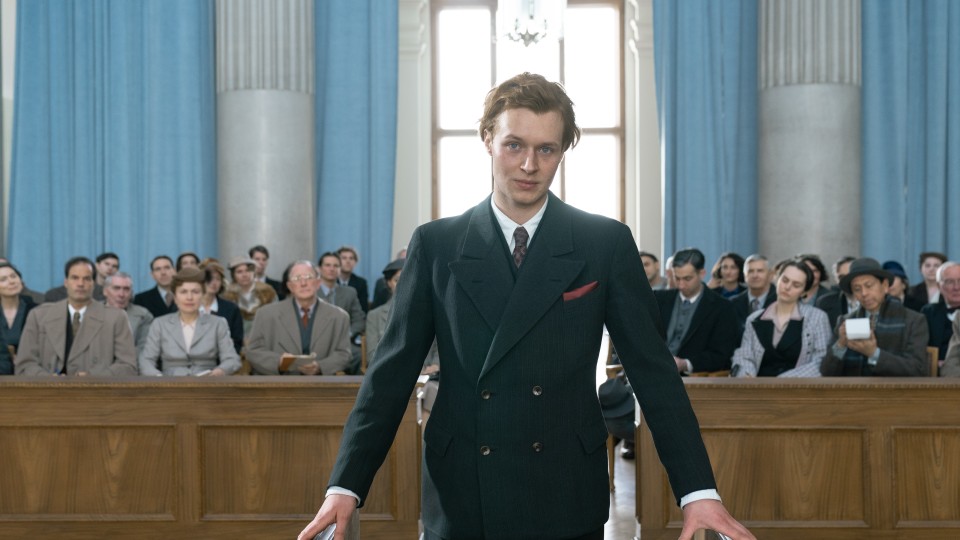
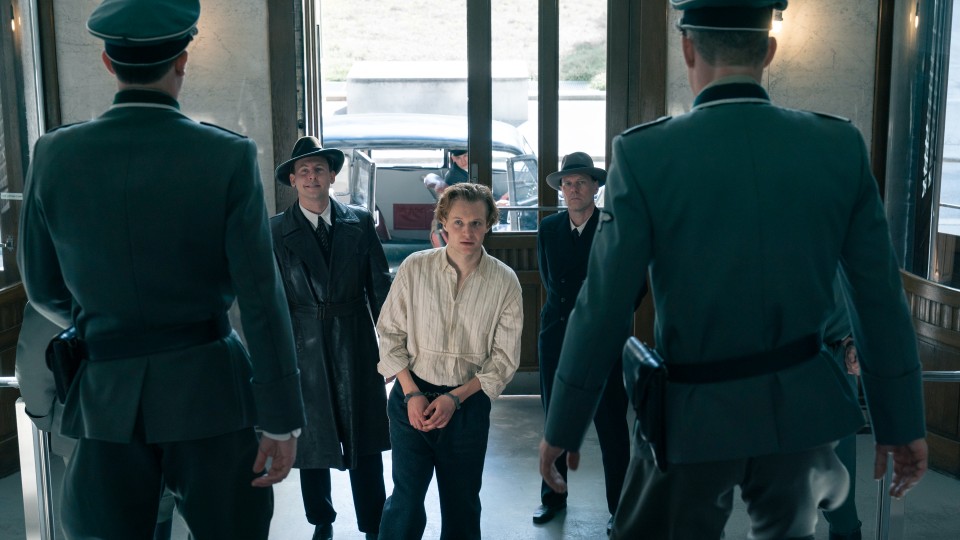
something if you want to. Although that didn’t save Kreisky from being imprisoned for 18 months before he was 27.
BRUNO – THE YOUNG KREISKY isn’t your first biographical work. In 2014, you made a TV film telling the story of the German
chemist Clara Immerwahr (1870–1915). What questions do you ask yourself in biographical storytelling? How do you deal with
the balancing act between the fictionalized and the factual elements?
HARALD SICHERITZ: I always wanted to do something about the First Republic. In 1888, my great-grandfather was one of the participants in the
Hainfeld Party Congress, the founding meeting of the Social Democratic Workers' Party of Austria. So the foundation had been
laid in our family. When you think of novelists, there are grandiose masters who have the ability to combine the fictional
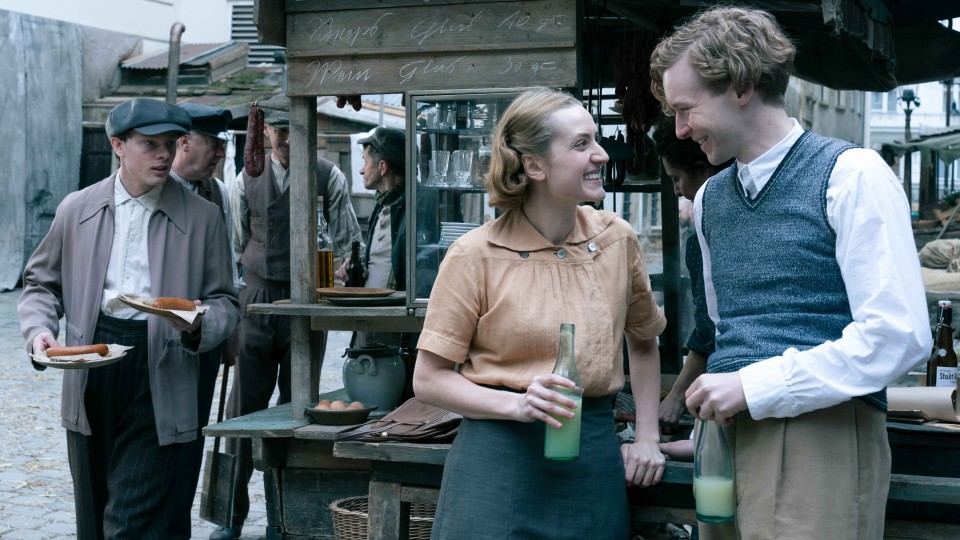
with the factual. Adele, who features in the film as Bruno's great love, is a narrative distillation of several young ladies;
otherwise, the narrative would be too loose. After all, the action of the film covers eleven years. Bruno's antagonist also
combines several individuals, including the person he himself described as his best friend. That’s where you see the challenges
of fictional storytelling, but also the appeal.
Was it also important to you to shed light on that period in Austria, between the two world wars?
HARALD SICHERITZ: That can certainly be seen as the second aim of the film. The First Republic has been virtually ignored in the teaching of
Austrian history for a very long time. It was neither appreciated nor articulated that Austria was, as far as I know, the
only country to go straight from a civil war into the Second World War. After 1945, it was decided to brush the dictatorships
of Engelbert Dolfuss and Kurt Schuschnigg under the carpet. Together with Susanne Freund as screenwriter, I had already tried
in vain to get stories off the ground that were set in the First Republic. It never worked out. And I suspect that if the
desire to say something about the First Republic in BRUNO – THE YOUNG KREISKY hadn’t been so closely linked to a character
who was such an important Austrian, it might not have worked out this time, either.
You also depict young adults around Kreisky and raise the question of what it means to embark on adult life, with the freedom
and independence that should entail, only to discover suddenly that you’re prevented by political circumstances from achieving
your plans and dreams. Were you concerned with this issue?
HARALD SICHERITZ: Absolutely. My parents were old enough to experience the period between 1938 and 1945 as young adults. In a situation like
that, there isn’t much point looking for an alternative. There was no way of escaping what was happening. Even among the Jewish
population, it took many people a while to accept that exile was the only hope. Bruno Kreisky spent a year and a half trying
to get his parents to leave Vienna and join him in Sweden. People tended to be unwilling to acknowledge everything that was
going on. And I know from my father's memories that one factor prompting people to stay, in the years before the war, was
the enormously high propensity for violence. It was very easy to become a pawn in this trial of strength, and you could only
get through by sticking to people you knew you could trust. Access to education was not a matter of course. The only structures
offering guidance were provided by the Church or political organizations. An interesting insight into that period for me was
that everyone – from the Communists to the Nazis – was trying to create the "new man".
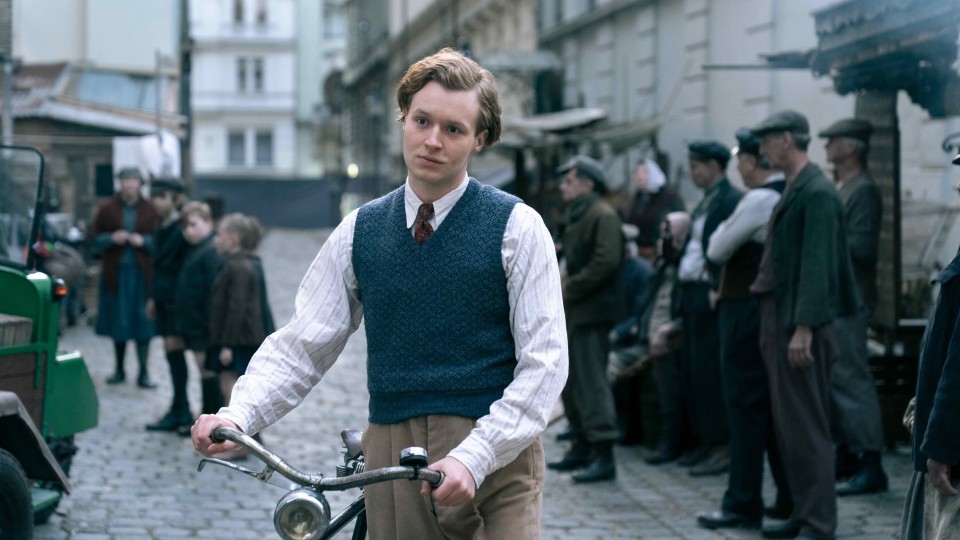
The film shows what it meant to be young in the early 1930s. And as a result, it also provides an opportunity to see the generation
of young Austrian acting talent on the screen. First and foremost, Nils Arztmann in the leading role. How did the casting
process go?
HARALD SICHERITZ: Of course there were several rounds. Nils Arztmann came late on our list, because I’d deduced from his name that he was German.
That was a mistake. When he was cast, he was studying at the Reinhardt Seminar in Vienna. I had already seen Maja Unger in
other films, and she was very convincing at the auditions. We didn't immediately have Soi Schüssler on our radar either, but
she convinced us very quickly. I'm also pleased that we cast people who aren’t yet so well known. All the actors were cast
in 2021 – and that's my best memory of the filming process – and in the spring of 2025, everyone who had been cast at that
time actually turned up. Nils Arztmann has now established himself at the Theater an der Josefstadt, Lucas Englander has started
an international career, but they were all there. That touched me, as an old silver fox. As did the fact that the young actors
formed a group as part of the working process, to meet and exchange ideas.
You chose music for the film that doesn’t correspond entirely to the style of the era. What effect did you want to achieve
with the music?
HARALD SICHERITZ: I've been involved with music all my life. I had long discussions with the composer of the film music, Lothar Scherpe, about
what music might be suitable. I wanted it to be striking and appropriate to the content. At some point we came up with the
blues You Gotta Move, which has probably been covered a hundred times and was in fact composed in 1929, i.e. at that time. Even the title struck
us as appropriate, because it could be translated somewhat loosely into German as “Vorwärts!” (which was also the slogan of
the Austrian Social Democratic Workers’ Party). We don’t use contemporary instruments; at that time, there weren’t any electric
guitars, or that type of drums. I wanted to create that discontinuity, so the historical doesn't become an end in itself.
I didn't want to make a film where we watch young people in a world that nobody but our great-grandparents would know. This
song wasn’t known to us here, but in the Mississippi Delta they were already playing You Gotta Move! What I really appreciate about fictional historical storytelling is that you have these opportunities and this freedom.
Interview: Karin Schiefer
June 2026